
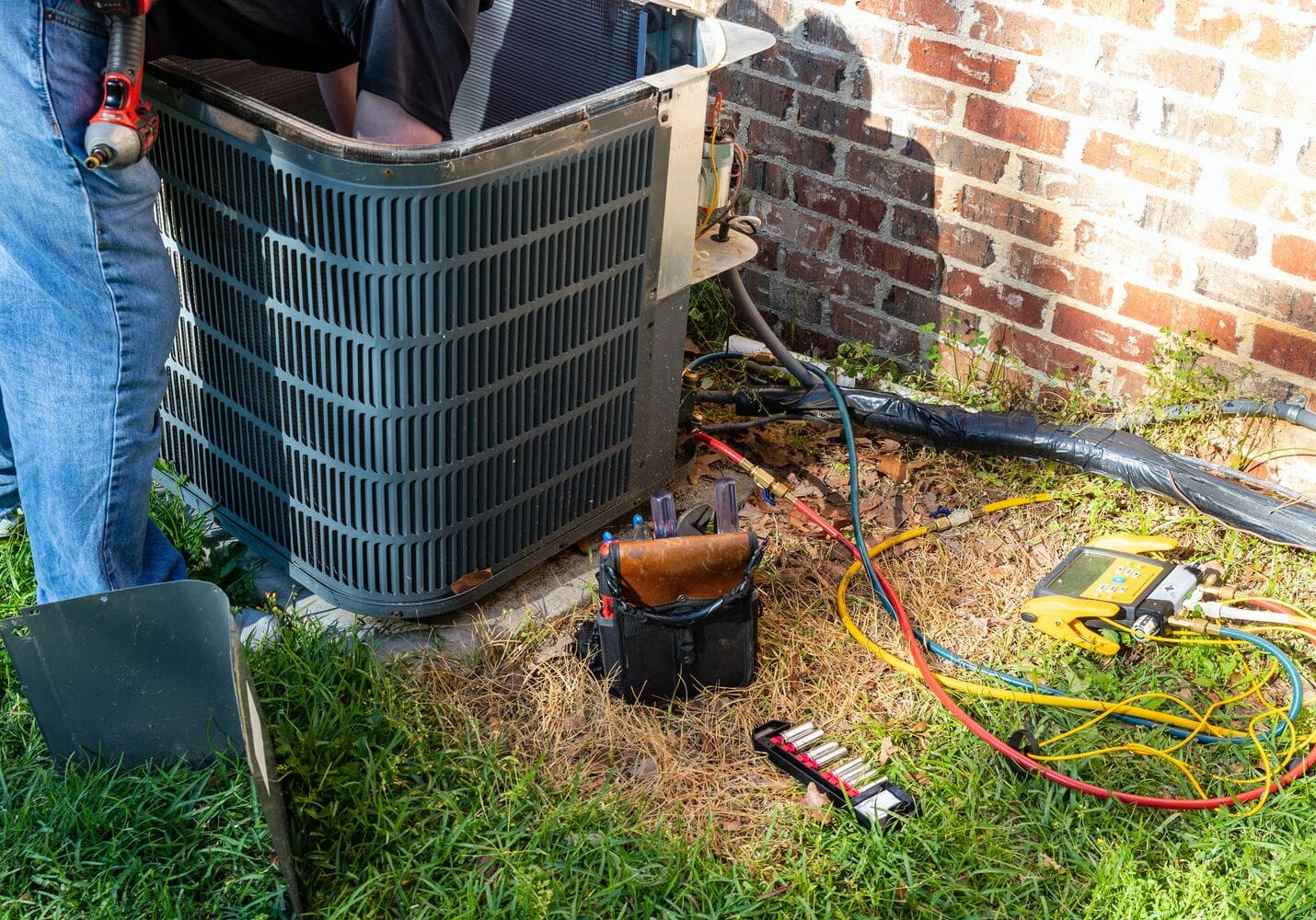
If your air conditioner is blowing warm air, start with the simple checks first: thermostat mode, fan setting, filter condition, open vents, breaker status, and whether the outdoor unit is running. If the issue points to an older system that is failing instead of one small fix, a proper air conditioner installation is a more durable answer than another patch on equipment that is on its way out.
Warm air does not always mean the AC is finished. Sometimes it is a setting, a clogged filter, or a tripped breaker. However, it can also point to restricted airflow, a frozen coil, low refrigerant, or an electrical failure that needs a technician.
The smart move is to troubleshoot safely, then stop at the right time. You can check settings and airflow. You should not open panels, handle refrigerant, bypass controls, or keep forcing the system to run if you see ice, smell something hot, or the breaker trips again.
Start Here: Quick Checks Before You Book A Repair
Before you book a repair, take a few minutes to rule out the obvious. This can save you a service call when the problem is simple, and it gives the technician better information if the issue is not simple.
The most common warm-air causes fall into a short list of safe checks any homeowner can run in a few minutes before deciding whether the issue needs service.
| Check | What To Look For | What To Do |
| Thermostat | Set to heat, fan only, or wrong temperature | Set to cool and auto |
| Filter | Dirty or clogged filter | Replace or clean it |
| Vents | Closed or blocked registers | Open vents and clear furniture |
| Breaker | Tripped AC breaker | Reset once only |
| Outdoor Unit | Fan not spinning or unit silent | Stop and call for service |
| Ice | Frost on coil, refrigerant lines, or outdoor unit | Turn cooling off and call for service |
The goal is not to diagnose every possible part. The goal is to separate safe homeowner checks from problems that can become unsafe or expensive.
Check The Thermostat First
Start with the thermostat because it is the easiest place to get misled. Make sure the system is set to cool, not heat or fan only. Set the fan to auto, then lower the temperature a few degrees below the current room temperature.
Here’s the catch. If the fan is set to on, the indoor blower may keep moving air even when the outdoor AC is not actively cooling. That can make it feel like the system is blowing warm air from the vents when the cooling cycle is not actually running.
If cool air returns after a few minutes, you may not have an AC equipment problem. If the air stays warm after the thermostat is set correctly, move to the filter, vents, breaker, and outdoor unit.
Check The Air Filter And Vents
A dirty filter can restrict airflow enough to weaken cooling. Closed supply vents, blocked return grilles, and furniture over registers can create the same kind of strain.
Federal guidance from Natural Resources Canada on home heating and cooling maintenance recommends inspecting, cleaning, or changing air filters regularly in central air conditioners, furnaces, and related equipment. Airflow is what lets the system actually move heat, so a starved system cannot cool the way it was designed to.
Replace or clean the filter if it is dirty. Open supply vents. Clear return grilles. Do not start taking ductwork apart or reaching into equipment. If airflow improves but the air is still warm, the issue is likely deeper than a dirty filter.
Check The Breaker Once, Not Repeatedly
A tripped breaker can shut off the outdoor unit while the indoor blower continues to run. When that happens, air still moves through the house, but the system is not removing heat.
Reset the AC breaker once if it has tripped. If it trips again, stop there. A breaker that keeps tripping is not a nuisance. It is a warning sign.
Do not keep resetting it. Do not open equipment panels. Do not try to bypass controls. Repeated trips can point to electrical trouble, a failing component, or a system under stress.
Look At The Outdoor Unit
Step outside and check the outdoor unit from a safe distance. Is the fan spinning? Is the unit silent? Is it buzzing? Is the indoor blower running while the outdoor unit does nothing?
Natural Resources Canada’s guide to air conditioning your home covers how central air conditioners work, along with sizing, operating costs, and maintenance. Homeowners can check fuses or circuit breakers when the system fails, but professional service is needed for anything deeper than that.
A silent or buzzing outdoor unit is not a DIY repair. It may involve a failed start component, motor issue, power problem, or control failure. You can observe it. A technician should diagnose it.
Common Reasons Your Air Conditioner Is Blowing Warm Air

Warm air from AC vents usually comes from one of two buckets: the system is not being told to cool, or it is trying to cool but cannot do the job properly.
The first bucket is simple. Thermostat mode, fan setting, filter condition, vents, and power. The second bucket is where service usually enters the picture: frozen coils, low refrigerant, outdoor-unit failure, weak airflow, or aging equipment.
The Thermostat Is In The Wrong Mode
The thermostat can make a healthy AC look broken. If it is set to heat, fan only, or an old schedule, the system may move air without cooling it. Smart thermostats can also create confusion if a schedule hold, app setting, or battery issue changes how the system runs.
Set the thermostat to cool. Set the fan to auto. Lower the setpoint below the current room temperature and give the system a few minutes to respond.
If the air becomes cool again, you likely caught a control issue, not a failed AC. If the air stays warm, the thermostat may still be involved, but the problem may also be with airflow, the outdoor unit, or the cooling system itself.
The Air Filter Is Dirty Or Airflow Is Blocked
A clogged filter limits how much air moves across the indoor coil. That can reduce cooling and, in worse cases, contribute to ice forming on the system. Dirty filters and coils can also cause malfunctions and may lead to premature compressor or fan failure.
This is why airflow problems deserve attention early. The AC may still run, but it is running under strain. Over time, that strain can turn a small maintenance issue into a real repair.
Replace the filter. Open vents. Clear return grilles. If the system still blows warm air after airflow is restored, do not keep lowering the thermostat. That rarely solves the problem and can make some issues worse.
The Outdoor Unit Is Not Running
A central AC system needs the outdoor unit to reject heat. If the indoor blower runs but the outside unit is off, the system can circulate air through the home without actually cooling it.
The cause may be simple, such as a tripped breaker. It may also be a failed capacitor, contactor issue, motor failure, control problem, or safety shutdown. Those are not parts homeowners should test or bypass.
The key signal is this: the system sounds like it is on inside, but the outdoor unit is silent, still, or buzzing. At that point, stop the guesswork and book service.
The Evaporator Coil May Be Frozen
A frozen coil can stop the system from absorbing heat properly. At first, you may notice weak cooling. Later, you may feel warm air because the system is no longer moving heat the way it should.
Ice often connects back to airflow restriction, low refrigerant, or another service issue. Inadequate maintenance, poor airflow, an incorrect refrigerant charge, and refrigerant leaks can all impair how well the system performs.
If you see ice on refrigerant lines, around the indoor coil area, or on outdoor equipment, turn cooling off. Do not scrape ice, pour hot water on components, or keep cycling the system. Ice is a stop sign.
Refrigerant May Be Low Or Leaking
Low refrigerant is not like low fuel in a car. A central air conditioner is a closed system. If refrigerant is low, it often means there is a leak, a charging issue, or both.
A trained technician should fix refrigerant leaks, test the repair, and charge the system correctly. The system also needs to match the manufacturer’s refrigerant specifications, since mismatched or incorrect charge causes its own performance and reliability problems.
Do not ask for “just a top-up” without finding the cause. A top-up may hide the real issue for a while, but it does not solve the leak. Warm air, ice, hissing sounds, and repeated weak-cooling complaints can all point in this direction.
The System Is The Wrong Size Or Poorly Matched To The Home
A system can run and still fail to cool well if it is the wrong size for the house. An undersized unit may run constantly and never catch up. An oversized unit may short cycle, cool unevenly, and leave the home feeling humid.
Sizing is not guesswork. It should account for the home’s square footage, layout, insulation, windows, ductwork, and cooling load. If your AC has always struggled, even after service, sizing or system matching may be part of the problem.
A replacement conversation should be careful, not rushed. Working with a contractor who treats choosing the right size air conditioner as a load calculation, not a guess based on square footage alone, is what protects long-term comfort and equipment life.
The AC Is Aging And Losing Reliability
Warm air is sometimes one symptom in a larger pattern. The system is older. It struggles on hot days. Repairs are becoming more frequent. Humidity control is getting worse. That is different from one clogged filter or one thermostat mistake.
Older ACs can still be worth repairing. However, repeated warm-air complaints usually deserve a broader look at age, repair cost, comfort, and remaining life.
Knowing the typical central air conditioner lifespan in Ontario helps clarify when replacement planning starts to make sense rather than another expensive repair on equipment that is past its useful life.
What You Can Safely Fix Yourself

Some fixes are simple. Others only look simple until they get expensive or unsafe. The difference matters.
A homeowner-level check should involve settings, filters, vents, visible outdoor-unit condition, and one breaker reset. Anything involving refrigerant, wiring, motors, capacitors, internal panels, or repeated breaker trips belongs to a trained technician.
Safe DIY Checks
Start with the basics. Set the thermostat to cool. Set the fan to auto. Replace or clean the filter. Open vents and clear return grilles. Make sure the outdoor unit has open space around it.
Then check power safely. If the breaker has tripped, reset it once. If it trips again, stop. If you see ice, turn cooling off and book service.
These checks solve some warm-air calls without risk. They also help you describe the problem clearly when service is needed. That saves time and reduces guesswork.
What Not To Touch
Do not touch refrigerant lines, electrical contacts, capacitors, motors, internal panels, pressure controls, or wiring. Do not try to test a buzzing outdoor unit. Do not bypass a safety switch or keep resetting a breaker.
These parts can be dangerous. They can also be easy to damage. A small repair can become a larger one when the wrong part is handled the wrong way.
This is not about scaring you. It is about drawing the line where homeowner troubleshooting stops. Settings and airflow are fair game. Refrigerant and electrical diagnosis are not.
When To Stop Troubleshooting
Stop troubleshooting if the breaker trips again, the outdoor unit buzzes but will not start, you smell something hot, or you see ice on the coil area or refrigerant lines. Also stop if there is water around the indoor equipment or the system keeps starting and stopping.
The same rule applies if warm air continues after the thermostat, filter, vents, and breaker checks. At that point, you have done the safe work.
Continuing to run the system can make damage worse. It is better to shut cooling down and get the issue diagnosed before the repair grows.
When Warm Air Means You Should Call For AC Service
Warm air does not always require a service call. But certain signs make the decision clear.
Call for service when the problem points beyond settings and airflow. That includes a silent outdoor unit, buzzing outside, ice, repeated breaker trips, recurring warm-air complaints, or an older system that keeps needing repairs.
Call If The Outdoor Unit Is Silent Or Buzzing
If the indoor fan runs but the outdoor unit is silent, the AC is not doing its full job. The system may still move air, but it is not removing heat properly.
A buzzing outdoor unit can point to a failed start component or another electrical issue. A silent unit may point to power, control, motor, or safety problems. Either way, this is no longer a thermostat-only check.
Do not keep cycling the system from the thermostat. Turn it off and call for service. A clear symptom description helps: “The indoor fan runs, but the outdoor unit is silent,” or “The outdoor unit buzzes and does not start.”
Call If Ice Appears Anywhere On The System
Ice is not normal on a central AC system. It usually means the system is not moving or transferring heat properly. That may come from restricted airflow, low refrigerant, or another service issue.
Lowering the thermostat will not fix ice. It can make the freezing worse because the system keeps trying to cool while the underlying problem remains.
Turn cooling off and let a technician inspect the cause. Do not scrape ice off the equipment. Do not force the system to run because the house is hot.
Call If Warm Air Comes Back After A Filter Change
If the dirty filter was the only issue, cooling should usually improve once airflow is restored. If warm air comes back, something else is likely happening.
This is where pattern matters. One odd cycle is one thing. Warm air that returns after a filter change, thermostat reset, or breaker reset is different.
Recurring warm air can point to refrigerant trouble, airflow problems, outdoor-unit failure, control issues, or a system that is starting to fail under summer load.
Call If The System Is Older And Repairs Are Stacking Up
An older AC with one simple fault may still be worth repairing. But an older AC with repeated warm-air problems, weak cooling, rising bills, and frequent service calls deserves a more practical conversation.
The question is not just “Can this be fixed?” The better question is “What does this repair buy me?” If it buys very little comfort or very little remaining life, replacement may deserve a look.
Reviewing typical air conditioner cost and installation in Ontario helps frame what a replacement decision actually involves, so a hot afternoon does not turn into a rushed contract for the wrong system.
Repair Or Replace: How To Think About The Bigger Decision
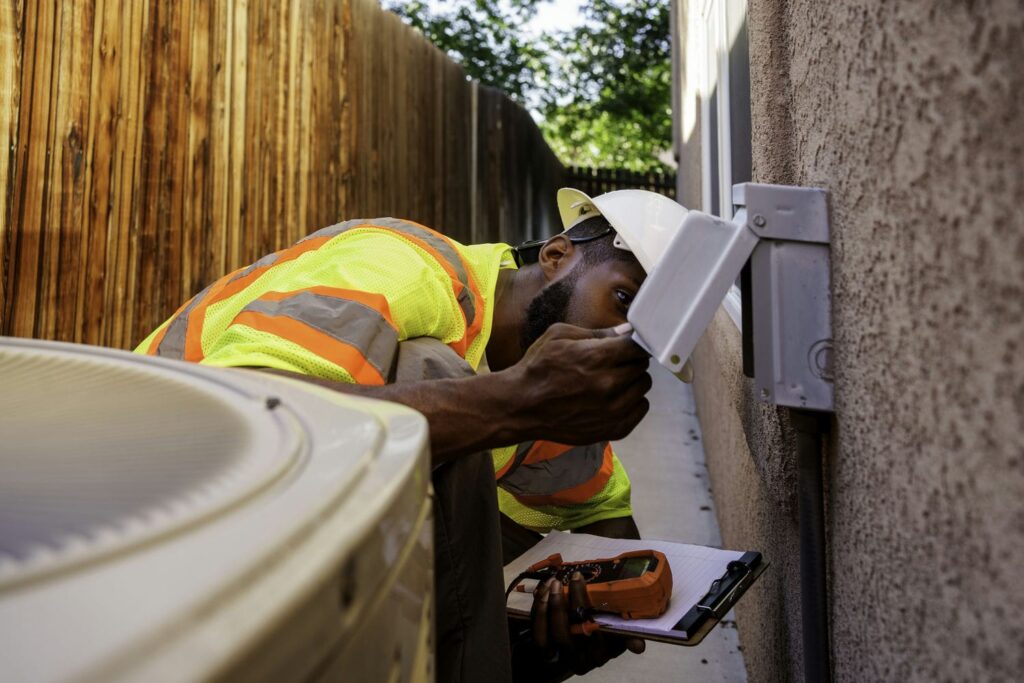
Do not jump straight from warm air to replacement. That is too blunt. Many warm-air problems are repairable.
That said, do not ignore the bigger pattern either. If the AC is older, unreliable, expensive to repair, and no longer keeping the home comfortable, warm air may be the symptom that finally exposes the real issue.
Repair Usually Makes Sense For Simple, Isolated Problems
A simple fault on an otherwise healthy system is usually a repair conversation. That could mean a thermostat setting, a dirty filter, a minor electrical part, a maintenance issue, or a one-time airflow problem.
This is especially true for newer or mid-life systems. If the equipment has been reliable and the issue is isolated, repair often protects the value you already have.
The key is context. A repair that restores proper cooling on a stable system is different from another patch on equipment that keeps failing.
Replacement Becomes More Likely When Problems Repeat
Replacement becomes more likely when warm air is part of a larger pattern. Think old equipment, major component failure, frequent repair calls, weak comfort, rising cooling costs, and long run times that still do not cool the house.
That does not mean replacement is always the answer. It means the decision should widen. Age, comfort, repair cost, and remaining life all matter.
Do Not Buy A New AC Based Only On Panic
A hot house creates pressure. That is when people make rushed decisions, accept vague quotes, or buy the first available system because they want the heat gone.
A good contractor should explain whether the problem is repairable, what the repair is likely to buy you, and what replacement would actually change. You should understand the difference between a fix, a patch, and a proper upgrade.
If replacement is likely, comparing fit, efficiency, and installed value before you commit makes more sense than chasing one number blindly. Understanding what SEER2 means for air conditioners gives you a clearer view of what efficiency claims actually translate to in operating cost.
Get A Clear Diagnosis Before The Heat Wins
Warm air from the vents is not always serious, but repeated warm air, ice, breaker trips, or a silent outdoor unit should be checked before damage spreads. If the thermostat, filter, and vent checks do not solve it, the next smart step is a proper diagnosis.
We help Kitchener-Waterloo homeowners separate quick fixes from bigger AC problems. Local Heating and Cooling has been serving homeowners for over 10 years, is an Authorized Lennox Dealer, and has offices in Kitchener and Waterloo. We will tell you when repair still makes sense and when the system is starting to cost you more than it is worth.
If your AC is blowing warm air and the simple checks did not solve it, reach out for a clear service recommendation. For systems that are failing, aging, or no longer worth repairing, learning what a proper central air conditioner installation should include is the next clear step.
Frequently Asked Questions
Your air conditioner may be blowing warm air because the thermostat is set incorrectly, the fan is set to on, the filter is dirty, vents are blocked, the breaker has tripped, the outdoor unit is not running, the coil is frozen, or the system is low on refrigerant. Start with the safe checks first, and if the thermostat, filter, vents, breaker, and outdoor unit do not reveal a simple issue, book service.
Check that the thermostat is set to cool, the fan is set to auto, the filter is clean, the vents are open, and the outdoor unit is running. Those checks cover the most common homeowner-level causes, and if the system still blows warm air after them, the issue likely needs proper diagnosis.
Yes. A dirty filter can restrict airflow, weaken cooling, and contribute to freezing, and over time it can lead to premature compressor or fan failure. Replace or clean the filter first, and if cooling does not improve, do not assume the filter was the only problem.
Turn cooling off if you see ice, smell something hot, hear buzzing from the outdoor unit, or the breaker trips, and also stop if warm air continues after the basic checks. Keeping the system running under the wrong conditions can make the problem worse, and a short pause is better than turning a repair into a larger failure.
It can, but low refrigerant is not the only cause. Warm air can also come from airflow problems, thermostat issues, a tripped breaker, a frozen coil, or outdoor-unit failure, and if refrigerant truly is low, it usually points to a leak or charging issue that a trained technician should diagnose, repair, and recharge correctly.
The indoor blower can run even when the outdoor condenser is not cooling, often because of a tripped breaker, failed component, control issue, motor problem, or safety shutdown. If the outdoor unit is silent or buzzing while the indoor fan runs, stop troubleshooting and call for service, because the system is moving air but not completing the cooling process.
Not always. A setting, dirty filter, minor electrical part, or maintenance issue may be repairable, while replacement becomes more likely when the system is older, unreliable, expensive to repair, and no longer keeping the home comfortable, in which case warm air is one sign in a bigger pattern rather than the whole problem.