

If your furnace is blowing cold air, you usually have one of two situations: normal timing (startup or cool-down) or a heat cycle that isn’t completing. The fastest way to tell is to set your thermostat properly, wait long enough for a full cycle, then check a few safe basics like fan mode, filter condition, and any blink codes. If you need help quickly, book our furnace repair and diagnosis services so you’re not guessing in the cold.
Here’s the catch. “Cold air” can sometimes be a safety issue, not a comfort issue. If you smell gas, notice electrical burning, or your carbon monoxide alarm goes off, stop troubleshooting and call for help.
The Most Common Reasons A Furnace Blows Cold Air
Most “cold air” complaints are not mysterious. They’re usually one setting, one timing issue, or one safety control doing its job.
Common causes include:
- Thermostat fan set to On: the blower runs even when burners are off, so you feel cool air moving.
- Normal startup delay: the blower can start before the heat exchanger is fully warm.
- Normal cool-down: the blower often runs after burners shut off to safely cool the furnace.
- Heat cycle failing: burners never light, or they light briefly then shut down.
- Overheating limit trips: restricted airflow overheats the furnace, so it shuts burners down and keeps the fan running.
- Short cycling: the furnace starts, stops, repeats, and never settles into a steady heat run.
If you’re getting airflow but the home still won’t heat, this deeper guide walks through the “air moving but no heat” scenario without repeating the basics.
First, Figure Out If It’s Truly Cold Or Just Not “Hot”
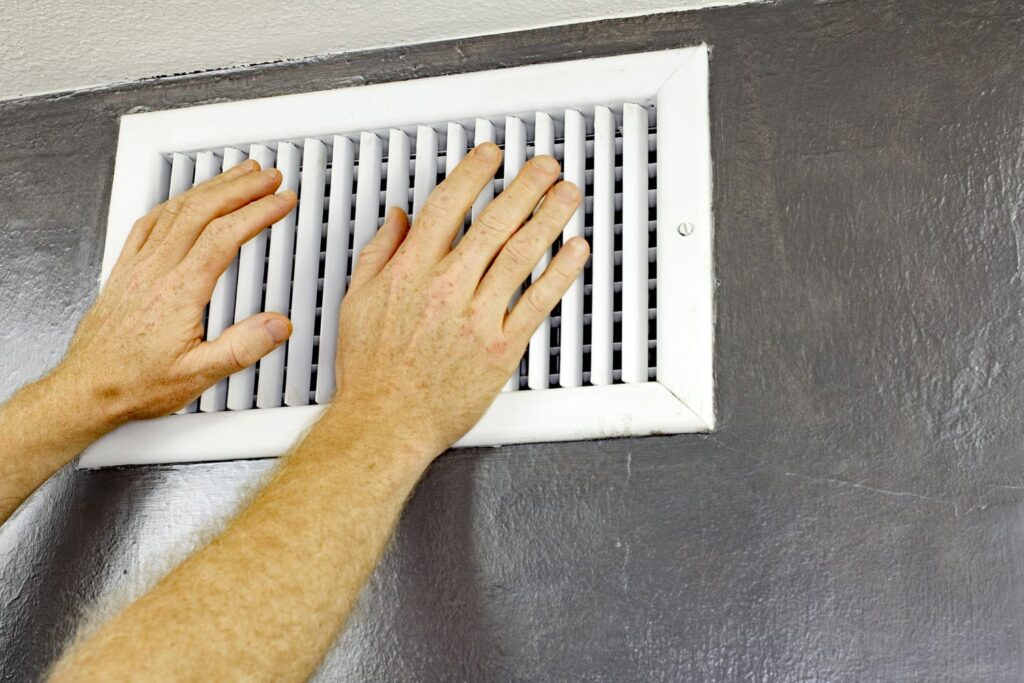
Before you chase repairs, you want to confirm you’re not chasing normal behaviour. Supply air from a vent often feels cooler than people expect, especially at the start of a heat call. Moving air also feels cooler on your skin, even when it’s warmer than room temperature.
The goal here is simple: give the system a fair test. If it never gets warm after a reasonable run, you’re dealing with a real problem.
What “Normal” Supply Air Can Feel Like
On many furnaces, the blower does not deliver “hot” air instantly. The furnace needs a short warm-up, and the blower may start once the heat exchanger reaches a safe temperature. Early in a cycle, the air can feel lukewarm, especially if the duct run is long or the vent is on an exterior wall.
A quick reality check is to set the thermostat to Heat, fan to Auto, raise the setpoint a few degrees, and let it run for 5–10 minutes. If the air goes from cool to warm and rooms begin to recover, you may simply be noticing startup timing.
If it stays cold the whole time, or it gets warm briefly then turns cold again, move to the safe checks below.
The Two Questions That Tell You A Lot
Ask two questions and be honest with your answers.
- First, is the thermostat still calling for heat? If the setpoint is above the room temperature and it still won’t warm up, something is preventing a stable heat cycle.
- Second, does the air ever get warm, even briefly? That pattern difference is one of the best clues you can gather without tools.
Write down what you notice. That small note can save you time and money when you call for service.
Safe Checks To Do In Order (No Tools, No Guessing)

This is the safe, homeowner-side checklist. No disassembly. No gas valve adjustments. No repeated resets. Do these steps once, in order. If the problem persists, stop and call. “Trying harder” is how small problems turn into bigger ones.
Step 1: Set Thermostat To Heat, Fan To Auto, Raise Setpoint
Set the thermostat to Heat, set the fan to Auto, and raise the setpoint 2–3°C above room temperature. Fan Auto matters because it helps you see whether the furnace is actually producing heat. Fan On can circulate cool air even when burners are off, which makes your home feel worse.
Now wait. Give the system a few minutes to start its heat sequence. Some thermostats and furnaces have short built-in delays, especially after recent cycling.
If the furnace starts heating normally after this change, you likely had a settings issue or you were feeling normal fan operation.
Step 2: Wait Out Startup Timing And Any Delay
Don’t judge the system in the first minute. Furnaces can have a warm-up period, and some systems delay starts after a power interruption or a quick on/off cycle. It’s common to feel cooler air briefly while the heat exchanger is warming.
A good test is a stable 5–10 minute call for heat. If the air warms up and stays warm, your furnace is likely fine, and you’re noticing normal timing.
If the air stays cold, or the furnace starts and then drops heat quickly, move on. That’s not a timing issue.
Step 3: Check Filter And Return Airflow
Restricted airflow is one of the most common reasons a furnace ends up blowing “cold” air. When airflow is too low, the furnace can overheat. The system will shut off the burners for safety, and the blower may continue running to cool the unit down. That feels like the furnace is “blowing cold” even though it’s actually protecting itself.
Replace an obviously dirty or collapsed filter, confirm it’s installed in the correct direction, and make sure return air grilles aren’t blocked by rugs, furniture, or storage boxes. Avoid closing a bunch of supply vents to “force heat” into one room. That usually makes airflow worse.
If you’re worried about choosing the right filter without choking your ductwork, use our furnace filter replacement services.
Step 4: Look For A Blink Code Through The Viewing Window
Most furnaces have a small viewing window on the blower door where you can see an LED status light. If the furnace is locking out or tripping a safety, you may see a blinking pattern. You don’t need to decode it perfectly. You just need to capture it.
Take a photo or short video of the blink pattern and note when it happens (at startup, after a minute, after several minutes). That information helps a technician pinpoint whether you’re dealing with ignition, overheating, or a control issue.
Reset guidance is simple: one reset can be reasonable. Repeated resets are not. If it locks out again quickly, stop and call for service.
Step 5: Listen For The Heat Sequence
You can learn a lot just by listening. A typical heat sequence often sounds like: a small motor starts (inducer), then ignition begins, then burners light, then the blower ramps up after a short delay. If you never hear a lighting sequence, the furnace may not be initiating heat at all.
If you hear repeated clicking or repeated attempts to light, treat that as a service call category. Don’t keep cycling power to “make it catch.” That often deepens lockouts and increases downtime.
If burners light briefly and then shut off, that’s also a strong sign you need professional diagnosis. Make a note of what you heard and how long it ran.
Step 6: Quick Gas Check (If You Have Natural Gas)
If you have a natural gas furnace, confirm whether other gas appliances are working (stove, fireplace, water heater). If nothing gas-related works, you may have a supply issue that the furnace cannot fix by itself. In that case, call the appropriate utility or service provider.
If other gas appliances work, the furnace may still have an ignition or safety problem. Do not start turning gas valves unless you know exactly what you’re doing. If you’re unsure, stop and call.
If you smell gas at any point, stop immediately and jump to the safety section below.
What The Pattern Means (Cold All The Time Vs Warm Then Cold)
Patterns matter. “Cold all the time” points to one bucket of problems. “Warm briefly, then cold” points to another. You don’t need tools to notice the pattern, and it’s one of the best things you can bring to a service call.
Here’s the catch: many people only notice the symptom, not the timing. Timing is often the clue.
Cold Air The Whole Time
If the furnace blows cold air continuously during a call for heat, the heating cycle may not be starting at all. That can be thermostat settings, a lockout, an ignition failure, or a safety switch preventing heat from initiating. It can also be as simple as fan mode being set to On while the furnace itself is not heating.
If the furnace is completely silent and nothing runs, that’s a different problem.
Warm Air For A Minute, Then Cold Air
If it blows warm air briefly, then turns cold, pay attention. That often points to overheating limit trips (airflow restriction), flame proving issues, or short cycling behaviour. The furnace may be shutting burners off for safety, then trying again later.
This is where short cycling becomes a likely suspect, especially if the pattern repeats every few minutes.
If the warm-then-cold pattern repeats after you replace the filter and clear returns, it’s time to stop DIY checks and book service.
Symptom-To-Cause
Use this table to decide your next move.
| What You Notice | Likely Cause Category | Safe Check | When To Call A Pro |
| Cold air only, heat never starts | Thermostat/lockout/ignition | Heat mode, fan Auto, wait 5–10 minutes, record blink code | If heat never starts after these checks |
| Warm briefly, then cold, repeats | Limit trip or short cycling | Replace filter, clear returns, keep vents open | If it repeats after airflow checks |
| Fan runs constantly, even when not heating | Fan setting / thermostat behaviour | Set fan to Auto and hold setpoint steady | If it still runs constantly or comfort stays poor |
| Clicking or repeated ignition attempts | Ignition safety fault | Record blink code and stop resetting | Immediately |
| Burning smell or scorch marks | Electrical hazard | Shut power off at switch/breaker | Immediately |
| Gas smell or CO alarm | Safety hazard | Leave area, get fresh air, call for help | Immediately |
If you’re unsure which row fits, choose the safer option and call a Kitchener-Waterloo HVAC company.
Gas Smell, CO Alarm, Or Exposure Symptoms
If you smell gas, leave the area and call for help from a safe location. If your carbon monoxide alarm sounds, or anyone feels dizzy, nauseated, unusually tired, or “off,” get fresh air immediately and treat it as urgent. Ontario’s carbon monoxide safety guidance covers alarms and what to do if you suspect exposure. Do not keep resetting the furnace if safety is in question.
Electrical Burning Smell Or Repeated Breaker Trips
If you smell electrical burning, hear buzzing, or see scorch marks, shut the system off and call. If a breaker trips, you can reset it once. If it trips again, stop. Repeated trips point to an electrical fault, not a “cold air” quirk.
This is one of those times where the right move is to protect your home first, then fix comfort second.If you’re unsure where the furnace switch is, don’t start opening electrical boxes. Call for service.
Repeated Lockouts After One Reset
One reset can be reasonable if you suspect a temporary lockout. Repeated resets can deepen lockouts, delay diagnosis, and turn a short visit into a longer one. If it locks out again quickly, capture the blink code and stop.
When you call, share what you observed: whether it ever got warm, whether it shut off suddenly, and any blink code pattern. That reduces downtime.
Why This Happens In Kitchener-Waterloo Homes
Local housing stock matters. In Kitchener‑Waterloo, we see a mix of older duct systems, finished basements, and renovations that quietly change airflow. “Cold air” complaints often show up after a change that seemed unrelated, like a new filter type, a basement remodel, or furniture blocking returns.
Cold snaps also expose marginal setups. A furnace that seemed “fine” in mild weather can struggle when runtime increases and airflow is tighter.
Airflow Changes After Renovations
Finished basements, new doors, and room layout changes can reduce return air paths. When return air is restricted, the furnace can overheat and shut burners down, leaving only the fan running. You feel “cold air,” but the system is reacting to airflow stress.
Another common cause is blocked returns. Storage bins, couches, and area rugs can cut off the air the furnace needs to operate correctly. That problem is easy to miss because the furnace itself is in the basement, not in the room where the blockage happens.
If cold air complaints started after a renovation, treat airflow as the first suspect.
Filters That Don’t Match The Duct System
A high-restriction filter can be helpful in the right system. In many older homes, it can be the trigger for overheating shutdowns and weak heating performance. You think you’re improving air quality, but you’re actually starving the furnace for airflow.
The right approach is to pick a filter your duct system can handle, then change it consistently. That gives you stable airflow and predictable performance.
If you’ve recently “upgraded” to a thicker or higher-rated filter and the cold-air problem started soon after, switch back to the correct filter and book an airflow check.
What A Professional Diagnostic Looks Like
If the safe steps don’t solve it, the fastest fix comes from measurement. A professional diagnostic is not “swap the most common part and hope.” It’s confirm the root cause, then correct it once.
This is where you get out of guesswork and back into predictable heating.
What We Measure To Stop The Guessing
We look at what the furnace is doing during a real call for heat. That includes verifying the ignition sequence, checking safety trips, and measuring whether airflow and temperature rise are within expected ranges. Those readings tell us whether the furnace is overheating, failing to prove flame, locking out due to venting/condensate safeties, or being driven by thermostat behaviour.
We also look at the duct system’s ability to move air, because many cold-air complaints are really airflow complaints in disguise. When airflow is wrong, the furnace can’t run the way it was designed to.
The goal is simple: stable heat cycles, even temperatures, and no repeated shutdowns.
Common Fixes We See
Sometimes the fix is straightforward: correct filter choice, clear return air restrictions, or adjust blower settings so airflow matches the furnace output. Other times, the issue is ignition or safety-related and needs service: sensors, pressure proving, condensate drainage issues, or control problems.
If the furnace is oversized or duct limits are forcing limit trips, we talk about longer-term solutions. That may include airflow improvements, control changes, or replacement planning if the furnace is older and failures are stacking.
A good fix is the one that doesn’t come back next week.
Preventing Cold Air Complaints Going Forward
Once your heat is restored, prevention is worth doing. It’s cheaper than emergency calls and it’s easier than guessing in January. This is the part homeowners skip, then regret.
Filter Discipline And Return Air Basics
Use the right filter, change it on schedule, and keep returns clear. Don’t block return grilles with furniture or storage. Don’t close half the vents to “push heat” around. That often causes overheating and burner shutdowns.
If you want one rule to remember: the furnace can’t heat what it can’t move. Airflow is the foundation.
If your home is dusty, you have pets, or you’re renovating, check filters more often. Your furnace doesn’t know you’re sanding drywall. It just reacts to the airflow restriction.
Know What “Normal” Sounds And Timing Are
Many “cold air” complaints are really “normal timing that feels weird.” The blower may start after a delay. The blower may run after heat shuts off. That’s normal on many systems.
What’s not normal is a pattern: repeated warm-then-cold cycles, repeated lockouts, or a furnace that never reaches steady warm supply air during a call for heat. When you know what normal looks like, you stop chasing ghosts and start catching real problems earlier.
If you’ve had repeated issues, book a measured check before the next cold snap.
Stop Guessing and Get a Professional Diagnosis
If your furnace is blowing cold air, you don’t need more guesses. You need a measured diagnosis that confirms whether this is normal timing, airflow stress, short cycling, or an ignition/safety fault. Local Heating and Cooling has over 10 years in business, we’re an Authorized Lennox Dealer, and we have offices in Kitchener and Waterloo, so you can get help from a local team that does careful work. Book our furnace repair and diagnosis services when you’re ready.
Frequently Asked Questions
It’s usually fan mode (On instead of Auto), normal startup/cool-down timing, airflow restriction causing limit trips, or a heat cycle that’s failing to start or stay lit. Start with thermostat settings, wait for a full cycle, then check filter and blink codes. If it stays cold after the safe checks, book service.
Briefly, yes. Many systems have timing delays and warm-up periods. Give it 5–10 minutes with the thermostat calling for heat before you decide it’s a true “cold air” problem. If it never gets warm, it’s not a timing issue.
If the burners are not running, the blower can still run and push cool air. That can happen from fan mode, a cool-down cycle after overheating, or a safety lockout. The fastest clue is whether the air ever gets warm, even briefly.
Yes. Restricted airflow can overheat the furnace. The system can shut off burners for safety while the blower keeps running to cool things down, which feels like cold air from vents. Replace the filter and clear return blockages first.
Auto for normal heating and for troubleshooting. Fan On can circulate cool air when the furnace is not heating and make the home feel colder. If you want continuous circulation, only use Fan On once you’re sure the furnace is heating normally.
That pattern often points to overheating limit trips, flame proving issues, or short cycling. If it repeats after you replace the filter and clear returns, stop resetting and call for service.
One reset can be reasonable if you suspect a temporary lockout. Repeated resets can deepen lockouts and delay a proper fix. If it locks out again quickly, record the blink code and call.
Call if cold air persists after thermostat and airflow checks, if you see repeated lockouts, or if there are safety signs like gas smell, CO alarm, electrical burning smell, or repeated breaker trips.