
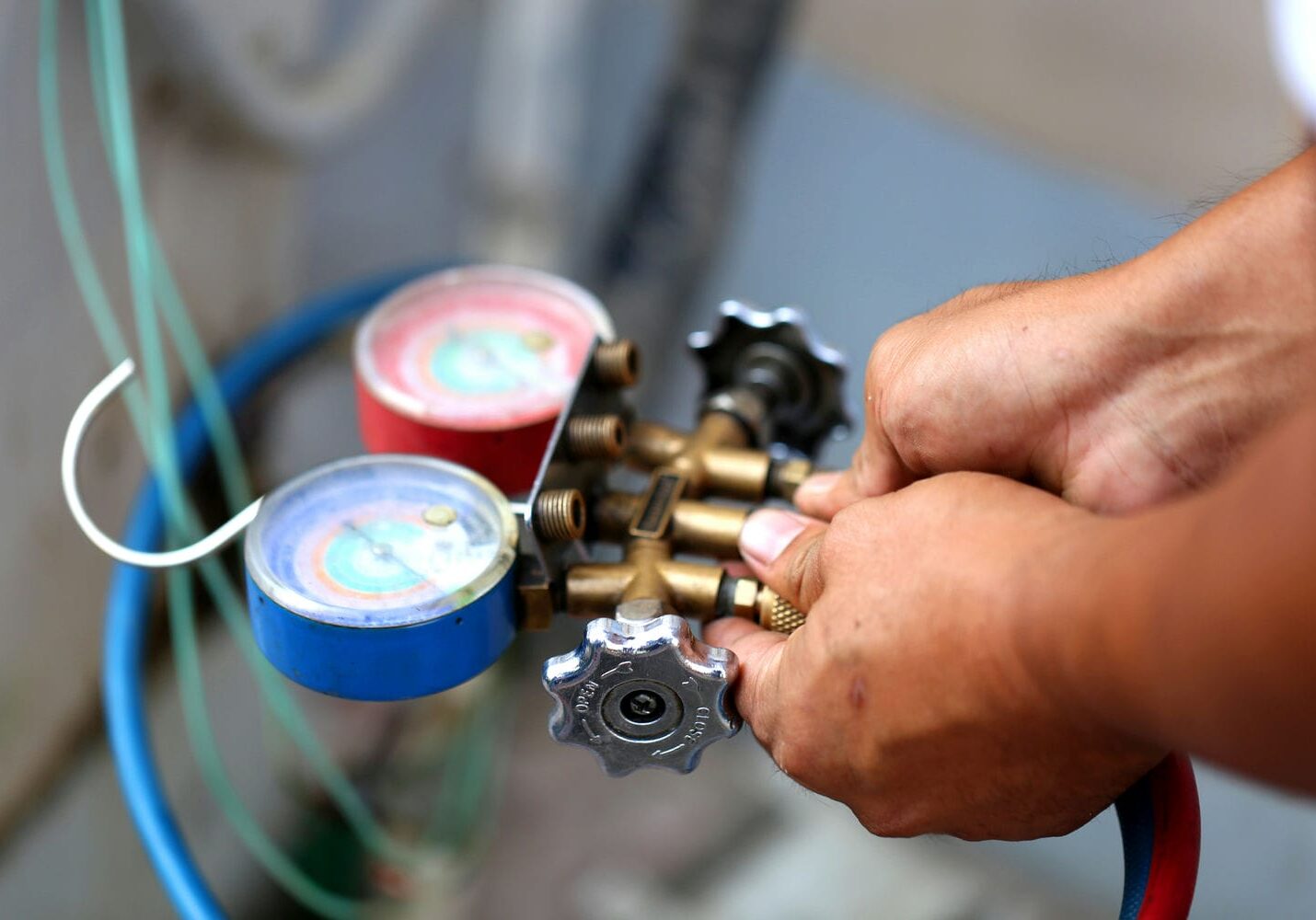
If your air conditioner has a refrigerant leak, the biggest signs are weak cooling, warm air from the vents, ice on the system, longer run times, rising hydro use, and sometimes hissing or bubbling near the refrigerant lines. Low refrigerant is not normal maintenance. It usually means the system needs proper leak detection, repair, and charging by a qualified technician. If the leak points to an older system that no longer makes sense to repair, a proper air conditioner installation should include the diagnostics and sizing work that makes the new equipment worth the investment.
The important point is simple: refrigerant is not fuel. Your AC should not slowly “use it up” during normal operation. If the level is low, something is wrong, and adding more refrigerant without finding the cause is usually a patch, not a repair.
The Short Answer: Low Refrigerant Usually Means A Leak
A central air conditioner moves refrigerant through a closed loop. When that loop is working properly, refrigerant keeps cycling through the system rather than disappearing during normal use. So if your system is low, the likely causes are a leak, poor charging, or a previous service issue.
Here’s the catch: low refrigerant symptoms can overlap with airflow problems, dirty filters, thermostat issues, and outdoor-unit problems. That is why one symptom is not enough to prove a leak. A pattern of weak cooling, ice, long run times, and repeated poor performance is more meaningful.
Define What Refrigerant Does
Refrigerant is the substance that moves heat out of your home. It absorbs heat at the indoor coil, then releases that heat outside through the outdoor unit. That heat-moving process is what makes central air conditioning work.
When refrigerant is low, the system cannot move heat properly. The AC may still run, and the indoor fan may still blow air, but the cooling result gets weaker. That is why homeowners often notice the problem first at the vents, not at the outdoor unit.
Why “Just Add More Refrigerant” Is The Wrong First Move
Adding refrigerant can make the system feel better for a while, but it does not solve the reason refrigerant was low in the first place. If the system has a leak, the added refrigerant can escape again. You end up paying for temporary relief while the real problem stays active.
A proper repair starts with diagnosis. The U.S. Department of Energy says leaks should be fixed, the repair should be tested, and the system should be charged correctly. Confirming the repair before adding more refrigerant protects the equipment and your money.
Symptom Reference Table
| Sign | What You Notice | What It Can Mean |
| Weak Cooling | Air feels cooler than room air but not cold | Low refrigerant or airflow issue |
| Warm Air | Vents blow room-temperature or warm air | Cooling cycle is not removing heat |
| Ice On Lines Or Coil | Frost or ice near refrigerant lines or indoor coil | Low refrigerant or restricted airflow |
| Hissing Or Bubbling | Noise near the lines or indoor coil area | Possible refrigerant escaping |
| Longer Run Times | AC runs often but does not satisfy the thermostat | System is losing cooling capacity |
| Higher Hydro Use | More runtime without better comfort | Efficiency loss or system strain |
These signs do not prove a leak by themselves. They tell you the system needs proper diagnosis. The worst move is to guess, add refrigerant, and hope the problem goes away.
Common Signs Your Air Conditioner Has A Refrigerant Leak
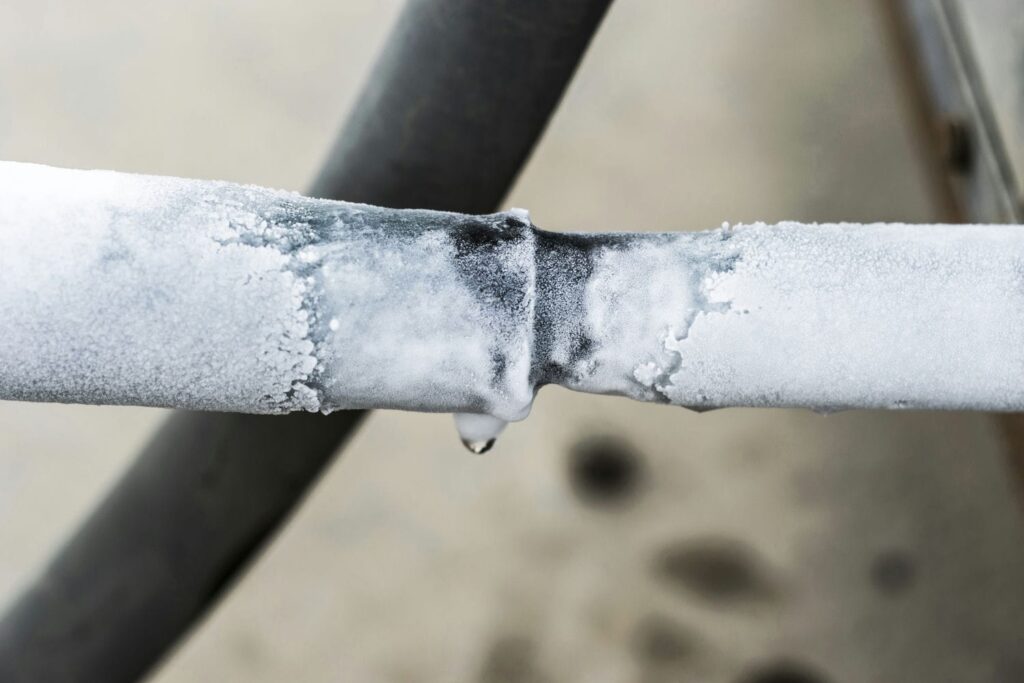
Most refrigerant leaks do not announce themselves with one dramatic symptom. They usually show up as a cluster of comfort and performance problems. The AC runs longer. The vents feel weaker. Ice appears. The house does not cool the way it used to.
One symptom is a clue.
A pattern is a warning. If the same cooling issue keeps returning after filter changes, thermostat checks, or service visits, the refrigerant side of the system deserves attention.
Weak Cooling Or Warm Air From The Vents
Weak cooling is one of the most common signs of low refrigerant. The system may still run, but the air coming from the vents feels only slightly cool or even warm. That happens because the AC is no longer absorbing heat indoors at the rate it should.
This symptom can also come from other problems, including a dirty filter, blocked airflow, or an outdoor unit that is not running. That is why it should not be diagnosed from the vent temperature alone. Working through the broader troubleshooting steps for an air conditioner blowing warm air can rule out the simpler causes before refrigerant becomes the focus.
Ice On The Refrigerant Line Or Indoor Coil
Ice on the refrigerant line or indoor coil is a serious warning sign. It often shows up when the system cannot transfer heat properly. Low refrigerant can cause this, but so can restricted airflow from a dirty filter, blocked return air, or coil problems.
If you see ice, turn cooling off and call for service. Do not scrape the ice, pour hot water on components, or keep lowering the thermostat. That can make the problem worse and may add strain to equipment that is already struggling.
Hissing Or Bubbling Sounds
A hissing sound near the refrigerant lines or coil area can be a sign of refrigerant escaping under pressure. A bubbling sound may point to refrigerant moving abnormally through the system or escaping through a leak. These sounds are worth noting, but they are not an invitation to hunt for the leak yourself.
Do not open panels, use soap bubbles, touch refrigerant lines, or try to locate the leak by hand. Just note what you hear, where you hear it, and when it happens. That information can help a technician narrow the diagnosis safely.
Longer Run Times Without Better Cooling
A leaking system may run longer because it has lost cooling capacity. The thermostat keeps calling for cooling, but the AC cannot remove heat fast enough. You may hear the system run for long stretches while the house barely changes temperature.
This symptom can overlap with dirty filters, duct problems, poor sizing, or aging equipment. The difference is the pattern. Longer run times plus ice, weak cooling, hissing, or repeated refrigerant service points more strongly toward a leak or charging issue.
Rising Hydro Bills Without Better Comfort
A refrigerant leak can make the system run longer while doing less useful cooling. That means more electricity use without better comfort. You may notice the house feels worse while the bill moves the wrong way.
Natural Resources Canada’s guidance on air conditioning your home notes that even a small loss of refrigerant can cause a significant drop in efficiency, and that leaks should be fixed and refrigerant recycled during service.
Oil Stains Or Residue Near AC Components
Some refrigerant leaks leave oily residue near fittings, coils, or line connections because refrigerant oil can escape with the refrigerant. You might notice staining near the outdoor unit, line connections, or around accessible components. Treat that as an observation, not a DIY leak test.
Do not open the system or touch suspected refrigerant lines. Take a photo if it is safe to do so, note where the residue appears, and share that with the technician. The goal is to give useful information without creating a safety or equipment risk.
The System Was Recently Serviced But The Problem Came Back
If your AC was charged recently and the cooling problem came back, the leak may not have been found or fixed. A refrigerant top-up can hide the symptom for a short time. It does not repair the source of the loss.
This is where you should ask better questions. Was the leak located? Was the repair tested? Was the system charged to the manufacturer’s specifications? The U.S. Department of Energy says refrigerant levels should match manufacturer specifications and that leaks should be repaired and tested before adding more refrigerant.
What To Check Before Assuming It Is A Refrigerant Leak
Not every weak-cooling problem is a refrigerant leak. Warm air, long run times, and even ice can also come from airflow problems, thermostat settings, a dirty filter, or an outdoor unit that is not running. Start with safe checks before assuming the worst.
Check the thermostat mode and fan setting. Replace or clean the filter. Open supply vents and clear return grilles. Look for ice. Listen for unusual sounds. Check whether the outdoor unit is running. Stop if breakers trip, ice appears, or the outdoor unit buzzes.
Check Airflow First
Airflow problems can mimic refrigerant problems. A clogged filter or blocked return can reduce airflow across the indoor coil, weaken cooling, and contribute to freezing. That can make the system look like it has a refrigerant issue when the first problem is actually restricted air movement.
Natural Resources Canada advises cleaning air filters at least once each season, keeping the condenser clean and free of leaves and debris, and servicing the unit if performance has deteriorated. Those maintenance basics matter because poor airflow can damage comfort and equipment performance.
Check The Thermostat And Fan Setting
A thermostat setting can make a healthy system look broken. If the fan is set to “on,” the blower may move room-temperature air between cooling cycles. If the system is in the wrong mode or following an old schedule, it may not be calling for cooling when you think it is.
Set the thermostat to cool. Set the fan to auto. Lower the temperature a few degrees below the current room temperature and give the system time to respond. If cool air returns, the issue may have been control-related, not refrigerant-related.
Check Whether The Outdoor Unit Is Running
The indoor blower can run while the outdoor unit is off. When that happens, air still comes through the vents, but the system is not rejecting heat outside. That can feel like a refrigerant problem because the house is not cooling.
Stand near the outdoor unit and observe from a safe distance. If the unit is silent, buzzing, or not spinning while the indoor fan runs, stop troubleshooting. Do not test capacitors, contactors, wiring, or motors. That is a service issue.
When The Pattern Points Back To Refrigerant
Refrigerant becomes more likely when several signs show up together. Weak cooling, ice, longer run times, hissing sounds, and a problem that returns after service all point toward a leak or charge issue. One clue can be another problem. Several clues tell a clearer story.
Low refrigerant is a diagnosis, not a guess. A technician should confirm airflow, system operation, and refrigerant condition before recommending a repair, recharge, or replacement discussion.
Is It Safe To Keep Running An AC With A Refrigerant Leak?

It is not smart to keep pushing an AC that may be leaking refrigerant. Running an undercharged system can waste electricity, reduce comfort, and add strain to major parts. It can also release refrigerant into the atmosphere if the leak is active.
Turn cooling off if you see ice, smell something hot, hear buzzing from the outdoor unit, or the breaker trips. If the system is weak but still running, book service rather than forcing it through a heat wave. Running is not the same as running safely.
Why Running It Can Make Damage Worse
Low refrigerant can create abnormal operating conditions inside the system. The AC may run longer, struggle to absorb heat, and place extra stress on the compressor. The compressor is one of the most expensive parts of the system, so this is not a small risk.
A struggling AC may still sound like it is working. That does not mean it is working properly. If the home is not cooling and the system is showing leak symptoms, shutting it down can be the cheaper move.
Why Refrigerant Handling Is Not A DIY Job
Refrigerant work is not homeowner work. It requires proper tools, recovery practices, leak testing, and certification. Under the Federal Halocarbon Regulations, 2022, only a certified person may install or service an air-conditioning or refrigeration system, or recover the halocarbon it contains, for systems under federal jurisdiction.
In Ontario, the same certification requirement appears in the Ozone Depletion Prevention certificate system that governs purchasing and handling refrigerants in air conditioning units. The practical takeaway is clear: do not buy refrigerant, open refrigerant lines, use sealants, or try to charge the system yourself.
Environmental Reasons The Leak Matters
A refrigerant leak is not just a comfort problem. Natural Resources Canada says refrigerant released into the atmosphere can damage the ozone layer and act as a greenhouse gas. It also says refrigerant should be recycled when service is performed.
That does not mean you need a lecture when your house is hot. It means the repair should be handled properly. Fixing the leak protects comfort, equipment, and the environment at the same time.
What A Proper Refrigerant Leak Service Should Include
A proper refrigerant service call is not just “add gas and leave.” It should start with diagnosis, move through leak confirmation, and end with a verified repair or a clear explanation of why repair may not make sense.
The process should include checking airflow, confirming system operation, assessing refrigerant condition, finding the leak when low refrigerant is confirmed, explaining whether the leak is repairable, testing the repair, recovering refrigerant properly, and charging the system only when it is ready.
Diagnosis Before Charging
A good technician should not jump straight to charging the system. Weak cooling can come from airflow problems, dirty coils, thermostat issues, outdoor-unit problems, or electrical faults. Those need to be ruled out before refrigerant becomes the focus.
This protects you from paying for the wrong service. If the system is not actually low, adding refrigerant creates a new problem. If it is low, charging without diagnosis leaves the leak untouched.
Leak Detection And Repair
When low refrigerant is confirmed, leak detection should be part of the conversation. The technician should explain whether the leak appears accessible, repairable, and worth repairing based on the system’s age and condition. A coil leak on an aging system is a different conversation than a small, accessible repair on newer equipment.
Canada’s federal halocarbon guidance says leak detection and repair are part of regulated service work, and that service or recovery work must be performed by a certified person for systems under federal jurisdiction. It also says that if a leak is detected in an air-conditioning or refrigeration system, a certified person must repair the leak, isolate and recover the halocarbon from the leaking portion, or recover the halocarbon from the system within the stated timeline.
Testing The Repair And Charging Correctly
The final step matters. The job is not finished when refrigerant is added. It is finished when the leak is addressed, the repair is tested, and the system is charged correctly.
The U.S. Department of Energy says a trained technician should fix refrigerant leaks, test the repair, and charge the system correctly. It also says refrigerant levels should match the manufacturer’s specifications. That is the standard you should expect before calling the issue solved.
Repair Or Replace: When A Refrigerant Leak Changes The Bigger Decision

A refrigerant leak does not automatically mean you need a new AC. That would be too blunt. Some leaks are repairable, and a newer or mid-life system may still have plenty of useful life.
However, leaks can change the bigger decision quickly. The question is not only “Can this be fixed?” The better question is whether the repair makes sense given the age of the AC, the leak location, the repair cost, and the system’s remaining useful life.
Repair May Make Sense For A Newer Or Mid-Life System
Repair may be the right call if the system is newer or mid-life, the leak is accessible, and the rest of the AC is in good condition. One repairable leak on an otherwise healthy system is usually not an automatic replacement decision.
The key is whether the repair restores real value. If the system cools well after a proper repair, has not had repeated failures, and still has useful life left, repair can be a practical choice.
Replacement Becomes More Likely On Older Systems
Replacement becomes more likely when the system is older, the leak is expensive to access, the coil is failing, refrigerant issues have happened before, or the AC already struggles with comfort and runtime. At that point, a leak may be one more sign that the system is nearing the end.
This is where age matters. Knowing the typical central air conditioner lifespan in Ontario helps clarify whether the system is approaching the point where another major repair is hard to justify.
Bring In Cost Context Only After The Repair Logic
Cost matters, but it should come after the diagnosis. A low repair cost on a healthy system is one thing. A major leak repair on an aging system with weak comfort is another.
Once the leak is confirmed and the repair path is clear, compare the repair cost against the value it actually buys. If replacement is starting to look more sensible, understanding air conditioner cost and installation in Ontario helps set realistic expectations before any quote is signed.
If Replacement Is Likely, Compare The Whole System
If replacement is on the table, do not choose a new AC based only on urgency. Compare the whole system: sizing, matched components, airflow, efficiency, comfort features, warranty, and install scope. A refrigerant leak may have exposed the problem, but the replacement decision should be broader than one failed part.
Efficiency matters, but it is only one part of the package. Understanding what SEER2 means helps frame how efficiency ratings should influence the decision without becoming the only thing you weigh.
Get A Proper Diagnosis Before Recharging
If your AC is showing signs of a refrigerant leak, the smart next step is not guessing and not asking for a quick top-up. It is confirming the cause, checking whether the leak can be repaired properly, and deciding whether the repair is worth it for your system’s age and condition.
Local Heating and Cooling has served homeowners for over 10 years, is an Authorized Lennox Dealer, and has offices in Kitchener and Waterloo. We help homeowners separate repairable problems from bigger replacement decisions, without turning every symptom into a sales pitch.
If your AC is weak, freezing, hissing, or repeatedly losing cooling performance, reach out for a proper diagnosis.
If the leak points to an older system that no longer makes sense to repair, our air conditioner installation team can walk through what a proper replacement should include for your home.
Frequently Asked Questions
The most common signs are weak cooling, warm air from the vents, ice on refrigerant lines or the indoor coil, longer run times, hissing or bubbling sounds, and rising hydro use without better comfort. One sign alone does not prove a leak. Several signs together make a leak or charge issue more likely.
A properly sealed central AC should not use up refrigerant as normal maintenance. Refrigerant is supposed to circulate inside a closed system, so if the level is low, it usually points to a leak, poor charging, or a previous service issue. That is why a simple top-up is not a complete answer.
It is not a good idea. Running an undercharged system can waste electricity, reduce comfort, and add strain to the compressor, so if you see ice, hear buzzing, smell something hot, or the system is not cooling, turn it off and call for service before a repairable issue turns into a larger problem.
No. Adding refrigerant without finding and fixing the leak is a temporary patch. The U.S. Department of Energy says a trained technician should fix leaks, test the repair, and charge the system correctly, so the better question is not whether the system can be topped up but why it was low and whether the leak has been repaired.
No. Ice can also come from restricted airflow, dirty filters, blocked return air, or other system problems. However, ice plus weak cooling, long run times, hissing sounds, or repeated poor performance can point toward low refrigerant, so turn cooling off and book service instead of forcing the system to keep running.
A technician should first confirm the symptoms and check basic system conditions such as airflow, thermostat operation, outdoor-unit function, and refrigerant charge. If low refrigerant is confirmed, they can use proper leak-detection methods and tools to locate the problem safely. The homeowner’s job is to report symptoms clearly; the technician’s job is to test the system properly.
Repair may make sense if the system is newer or mid-life and the leak is accessible. Replacement becomes more likely when the AC is older, the leak is expensive to repair, or comfort and reliability are already declining. The best decision depends on age, leak location, repair cost, and remaining useful life, and a good diagnosis should make that choice clearer, not more pressured.