
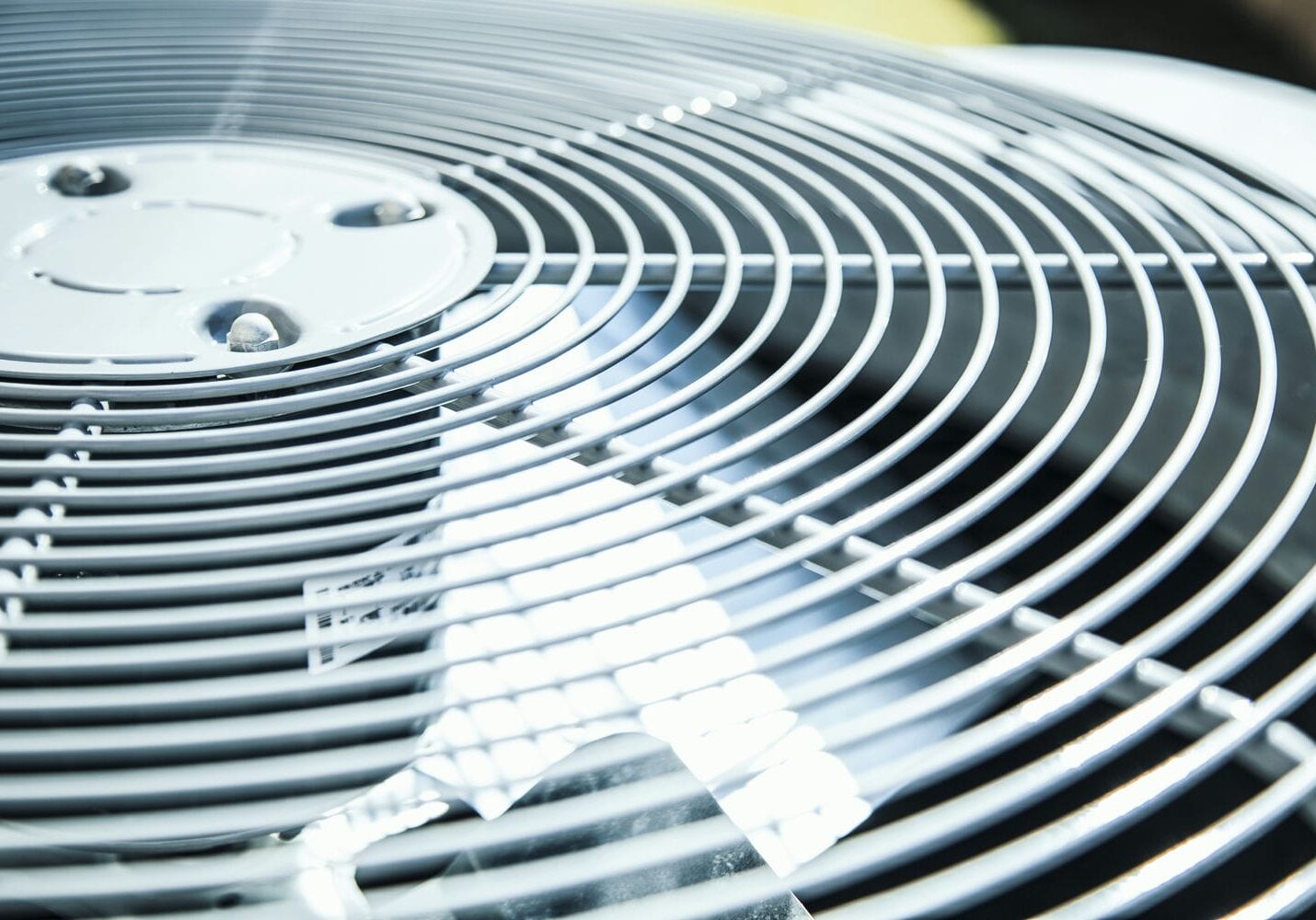
If your outdoor AC fan is not spinning, turn cooling off and start with safe checks only: thermostat setting, breaker status, obvious outdoor-unit obstruction, and whether the unit is silent, humming, buzzing, or clicking. The likely causes include a capacitor, motor, contactor, power issue, or safety shutdown, but those parts should be diagnosed by a technician. If the fan issue turns into a bigger replacement conversation instead of a simple repair, a proper air conditioner installation matters more than swapping a single part, since the right system fit affects how reliably everything runs afterward.
Do not push the fan blade with a stick. Do not open the condenser cabinet. Do not test capacitors, wiring, or contactors. A stopped outdoor fan can put the system under strain, especially if the unit is still humming or trying to run.
Electric control failure is a common reason an AC stops working, and electrical connections and contacts are exactly the kind of thing that should be checked during a professional service call rather than at home. Natural Resources Canada is clear that harder electrical and mechanical service tasks should be handled by a competent service contractor.
Turn Cooling Off And Do The Safe Checks
A condenser fan that is not spinning is not a “wait and see” symptom. The outdoor fan helps move heat away from the outdoor coil. If the system keeps trying to cool without that airflow, it can create extra heat, trigger shutdowns, and risk larger damage.
Use the checks below to rule out obvious issues. They are safe homeowner checks, not repair steps.
| Check | What To Look For | Safe Next Step |
| Thermostat | Wrong mode or no cooling call | Set to cool and lower setpoint |
| Breaker | Tripped AC breaker | Reset once only |
| Outdoor Unit Sound | Silent, humming, buzzing, or clicking | Note the symptom for service |
| Fan Blade | Not spinning, wobbling, or blocked by debris | Do not touch the blade |
| Debris Around Unit | Leaves, grass, branches, or blocked airflow | Clear outside debris only |
| Indoor Air | Warm air or no cooling indoors | Turn cooling off and call service |
| Burnt Smell | Electrical or hot smell near unit | Stop and call service |
If the fan still does not spin after the safe checks, stop there. The next step is proper diagnosis, not guessing at parts.
Do Not Keep Running The AC
The outdoor fan moves air across the outdoor coil so heat can leave the system. When that fan stops, the AC may still sound partly alive, but the cooling process is not working the way it should.
Natural Resources Canada says dirty filters, dirty coils, and dirty fans reduce airflow, lower efficiency and capacity, and can lead to expensive compressor damage if airflow problems are left too long. That is the bigger point here: airflow is not optional.
If the fan is still, do not lower the thermostat and hope the system catches up. Turn cooling off. A hot house is frustrating, but a damaged compressor is worse.
Check The Thermostat And Breaker Once
Confirm the thermostat is set to cool and the temperature is set below the current room temperature. Also remember that the thermostat’s fan setting usually controls the indoor blower, not the outdoor condenser fan. The indoor fan can run while the outdoor fan is still stopped.
Next, check the AC breaker. If it has tripped, reset it once. If it trips again, stop.
One reset is a check. Repeated resets are a warning. A homeowner can check fuses or reset a tripped breaker when the system fails, but electric control problems and connection issues belong in professional service.
Look And Listen From A Safe Distance
Stand near the outdoor unit and observe. Is it silent? Is it humming? Is it clicking or chattering? Does the fan try to start and then stop? Those clues can help a technician narrow the cause.
Do not touch the grille or fan blade. Do not put a stick, screwdriver, or finger through the top. The fan can start unexpectedly, and the electrical side can still be hazardous.
Write down what you notice. “Outdoor unit hums but fan does not spin” is more useful than “AC broken.” Clear symptoms make the service call faster and cleaner.
Clear Exterior Debris, But Do Not Open The Unit
You can clear leaves, grass clippings, branches, weeds, and other debris from around the outside of the condenser. Keep the area open so the unit can breathe. Do this only from outside the cabinet.
Do not remove the grille. Do not reach inside the unit. Do not pull debris from the fan area if you need to put your hand near the blade or internal parts.
Natural Resources Canada advises keeping the outdoor coil clear of dirt, leaves, and grass clippings, and considering professional cleaning if it becomes badly plugged. That supports exterior housekeeping, not internal DIY repair.
What A Non-Spinning AC Fan Usually Points To
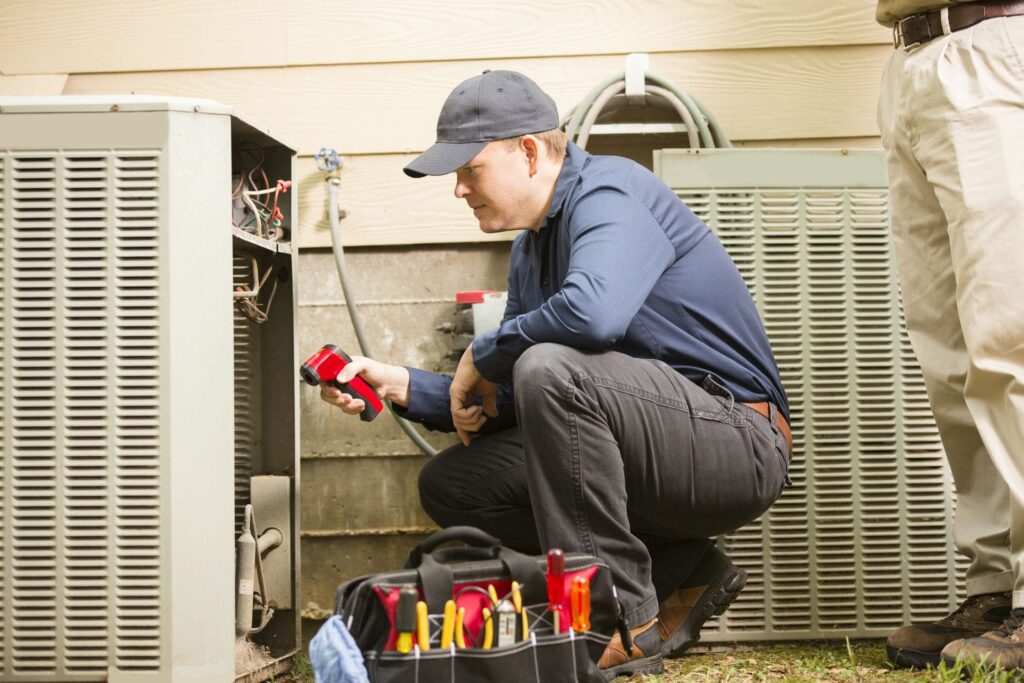
The sound matters. A silent unit, humming unit, and clicking unit do not point to the same problem. That said, symptoms only suggest a direction. They do not prove the failed part.
The most common suspects are a capacitor, condenser fan motor, contactor, power issue, obstruction, or safety shutdown. Here is how to think about each one without turning this into unsafe electrical work.
Failed Capacitor
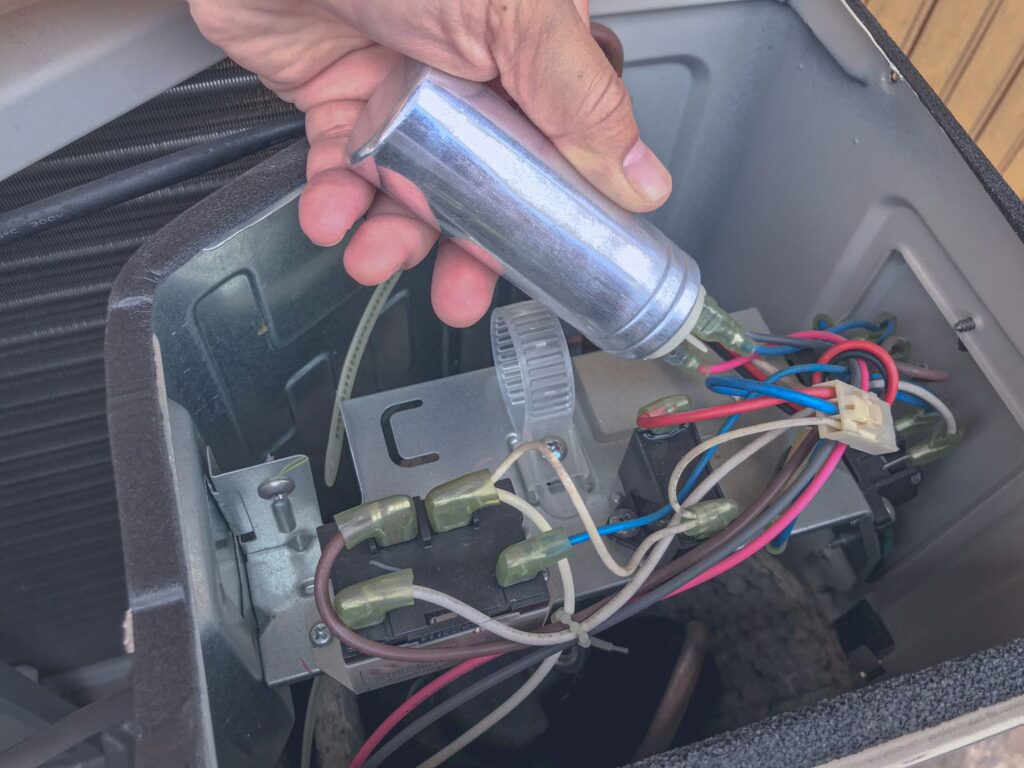
A capacitor helps the fan motor and compressor start and run by storing and releasing electrical energy. When it weakens or fails, the outdoor unit may hum while the fan does not start. The fan may also start slowly, stop after a short run, or fail more often on hot days.
This is why many homeowners jump straight to “bad capacitor.” Sometimes they are right. Sometimes they are not. A failing motor, contactor, wiring issue, or power problem can look similar from the outside.
Capacitors can hold electrical charge even after power is off. Do not test, remove, discharge, or replace one yourself. A capacitor failure can look simple from outside the cabinet, but the repair is not a safe homeowner task.
Bad Condenser Fan Motor
The condenser fan motor turns the blade that moves air across the outdoor coil. If the motor fails, overheats, seizes, or loses power, the blade may not spin even though the system is calling for cooling.
Possible signs include humming, slow or intermittent fan operation, grinding or squealing before failure, a hot electrical smell, or a fan that starts and stops. These signs are useful to report, but they are not proof.
Keep the check visual and auditory. Do not touch the motor. Do not spin the blade by hand. Do not remove the top grille. Natural Resources Canada notes that outdoor unit fans should be cleaned and lubricated where applicable according to manufacturer instructions, and that difficult electrical or mechanical checks should be handled by a competent service contractor.
Contactor Or Control Problem
The contactor is an electrical switch that sends power to the outdoor unit when the thermostat calls for cooling. If it fails, sticks, chatters, burns, or does not pull in properly, the unit may stay silent, click, chatter, buzz, or start inconsistently.
This is high-voltage work. Do not clean contacts. Do not file contacts. Do not bypass the contactor. Do not open the cabinet to see if it is “pulling in.”
Electric control failure is a common AC problem, and frequent cycling along with corrosion of wires and terminals can contribute to it. This is another reason electrical connections and contacts should be checked during a professional service call rather than at home.
Tripped Breaker, Disconnect, Or Power Issue
A fan may not spin because the outdoor unit is not getting proper power. A tripped breaker is the only homeowner-level power check here. You can reset it once if it has tripped.
A disconnect, fuse, damaged wiring, low-voltage issue, or internal electrical fault should be handled by a technician. Those problems can look small from the outside, but they are not safe to test casually.
If the breaker trips again, stop. Repeated breaker trips can point to a failing motor, compressor issue, short, wiring fault, or another electrical problem.
Debris Or Physical Obstruction
Leaves, sticks, animal nesting material, or heavy debris can sometimes interfere with airflow or fan movement. That does not mean you should reach inside the cabinet.
Clear the outside area only. Trim back vegetation. Remove debris around the base and sides. Keep the condenser open to airflow.
If you can see something inside the grille, leave it alone. A technician can shut the unit down properly, open it safely, and check for blade damage, motor strain, or wiring issues.
Safety Shutdown Or Compressor Protection
Sometimes the fan is not spinning because the system has shut itself down. A protection control, pressure issue, heat condition, or electrical fault may stop operation. The visible symptom is the still fan, but the cause may be somewhere else.
That is why “it must be the capacitor” can become an expensive guess. A proper diagnosis checks the thermostat call, power, capacitor, motor, contactor, wiring, coil condition, and system operation.
The symptom is visible. The cause is not.
Capacitor, Motor, Or Contactor: How The Symptoms Differ
This comparison can help you describe the problem. It should not be used as a parts-replacement guide.
| Symptom | More Likely Suspect | What It Means | Safe Homeowner Action |
| Outdoor unit hums, fan still | Capacitor or motor | Motor may be trying but not starting | Turn cooling off, call service |
| Outdoor unit silent | Contactor, power, control issue | Unit may not be receiving the start signal or power | Check breaker once, then service |
| Outdoor unit clicks or chatters | Contactor or control issue | Electrical switch may be failing or unstable | Turn system off, call service |
| Fan starts, then stops | Motor, capacitor, overheating | Part may fail under load | Do not keep cycling |
| Breaker trips again | Motor, compressor, wiring, electrical fault | System may have a serious electrical issue | Stop resetting |
| Fan blade wobbles or scrapes | Motor bearing, blade, obstruction | Mechanical failure or damage | Do not touch blade |
Use the table to guide the conversation with a technician. Do not use it to test live components.
If The Unit Hums But The Fan Does Not Spin
A humming outdoor unit often means something is trying to run. A weak capacitor may not be helping the motor start, or the fan motor itself may be failing. Either way, the right move is to turn cooling off.
Do not push-start the fan. That advice shows up online often, but it is poor guidance for most homeowners. Even if the fan starts, the failed part remains failed.
This symptom often shows up as poor cooling indoors. When the air conditioner is not cooling at all, the safe checks run wider than the fan itself, so it is worth treating the two symptoms together.
If The Outdoor Unit Is Completely Silent
A silent outdoor unit may mean the thermostat is not calling for cooling, the breaker is tripped, the contactor is not engaging, a safety control is active, or the outdoor unit is not receiving proper power.
You can check thermostat settings and reset a tripped breaker once. After that, stop. Silence does not make the problem safer.
Do not open the disconnect. Do not test voltage. Do not inspect internal wiring. A technician can confirm whether the call for cooling is reaching the unit and whether the outdoor unit is responding properly.
If The Unit Clicks Or Chatters
Clicking or chattering can point to a contactor, control, or low-voltage problem. It may sound minor, but it can be part of an unstable electrical condition.
Turn the system off and note the sound. Tell the technician whether the clicking happens once, repeats quickly, or comes with a hum or fan movement.
Do not leave the system chattering. Repeated attempts can add wear and make the failure harder on other parts.
If The Fan Starts And Stops
A fan that starts and then stops may point to a weak capacitor, failing motor, overheating motor, loose connection, or safety shutdown. Intermittent problems can be easy to dismiss because the system appears to recover.
Do not ignore it. A part that fails under load often fails when the weather is hottest and the system is working hardest.
If the fan starts and stops more than once, turn cooling off and book service. The issue is no longer a one-off oddity.
If The Breaker Trips Again
A breaker that trips again after one reset is a stop sign. It can point to a short, failing fan motor, compressor issue, wiring fault, or other electrical problem.
Do not keep resetting the breaker to get through the day. That is not troubleshooting. That is forcing a fault.
At that point, shut the system down and book proper diagnosis. The repair may be simple, but repeated resets make the risk higher.
What You Can Safely Check Yourself
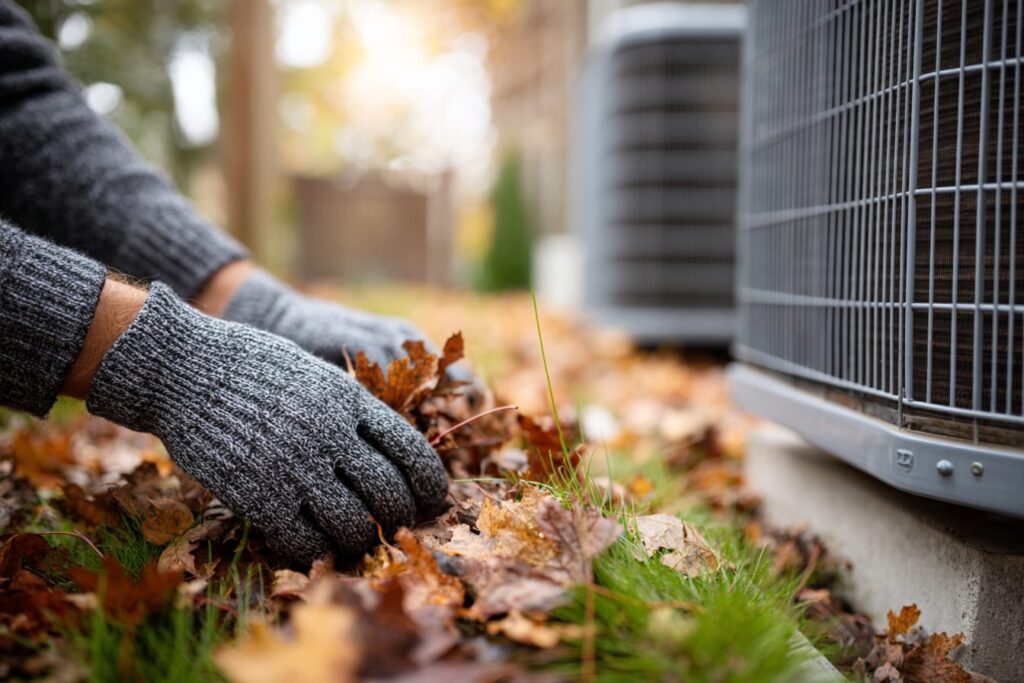
You can check settings, power status, exterior debris, and visible symptoms. You should not test or touch electrical parts inside the condenser.
This section is intentionally limited. A safe check protects your system. Unsafe guessing can damage it.
Safe DIY Checks
Set the thermostat to cool and lower the setpoint a few degrees. Confirm the indoor blower is running. Then step outside and observe whether the outdoor unit is silent, humming, buzzing, clicking, or trying to start.
Check the AC breaker once if it has tripped. Clear leaves, grass clippings, or debris around the outdoor cabinet. Keep your hands, tools, and sticks away from the fan blade and grille.
If the fan remains still, the unit hums, the breaker trips again, or you smell something hot, turn cooling off and call for service. These checks help the technician. They are not meant to fix the electrical problem.
What Not To Touch
Do not touch the capacitor, contactor, wiring, fan motor leads, disconnect fuses, fan blade, control board, compressor terminals, internal panels, or any part behind the condenser grille or cabinet.
These parts can involve stored electrical energy, live voltage, sharp metal, moving blades, or compressor-related faults. The wrong move can injure you or turn a simple repair into a larger one.
This is the line. Outside observation is fine. Inside electrical diagnosis is not.
Do Not Push-Start The Fan Blade
Do not spin the fan with a stick, screwdriver, or hand. This advice is common online because a fan that starts after a push can suggest a capacitor or motor problem. That does not make it safe.
The fan can start unexpectedly. The blade can injure you. The electrical fault remains active. And the system may still be under strain even if the blade starts moving for a short time.
If the fan needs a push to run, it needs service. That is the answer.
What To Tell The Technician
Give the technician clear details. Say whether the indoor blower runs, whether the outdoor unit is silent, whether it hums, clicks, buzzes, or chatters, and whether the breaker tripped.
Also mention whether warm air is coming from the vents, whether the fan starts and stops, whether there was a burning smell, how old the AC is, and whether this has happened before.
That information matters. It helps separate a simple part failure from a larger outdoor-unit problem.
When A Fan Problem Turns Into A Bigger AC Problem
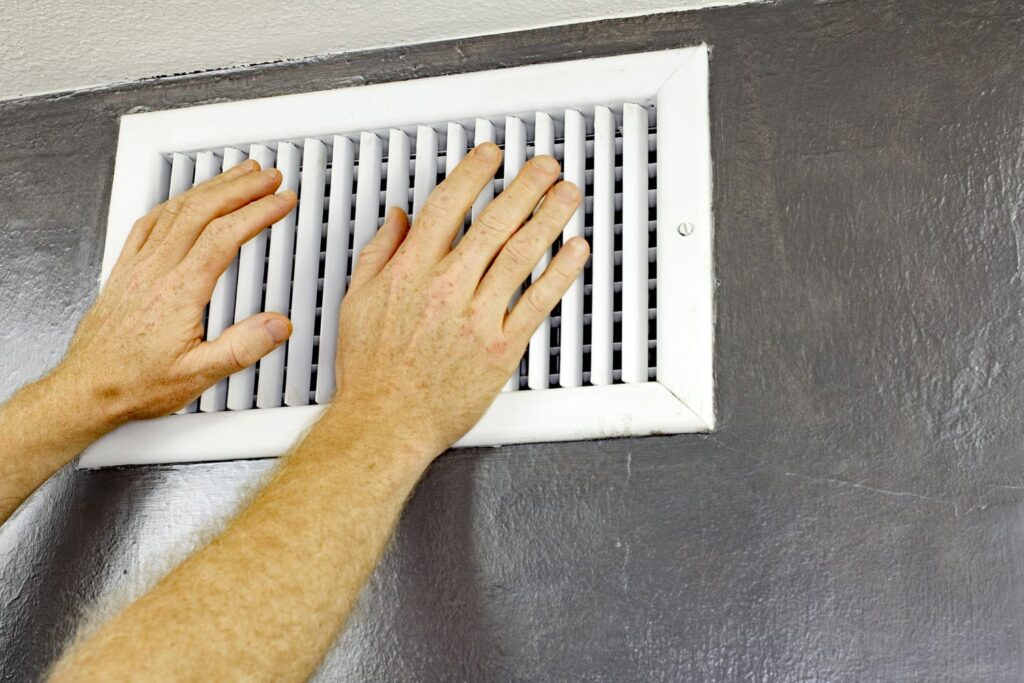
A fan part can be simple. The damage caused by running without that fan may not be.
That is why a stopped outdoor fan deserves a quick response. It affects comfort, equipment strain, and sometimes the repair-versus-replacement decision.
Warm Air Or No Cooling Indoors
If the outdoor fan is not spinning, the indoor blower may still move air through the vents. That air may feel warm or room-temperature because the outdoor unit is not rejecting heat properly.
This is why some homeowners say, “The AC is on, but it is blowing warm air.” The system sounds active, but the cooling cycle is incomplete.
When warm air from the vents is the main symptom, an air conditioner blowing warm air usually points to a narrower set of causes than a fan that has stopped entirely, which changes where the troubleshooting should start.
Compressor Strain
The compressor is the expensive part you want to protect. When the outdoor fan is not moving heat away, the compressor can face higher strain or shutdown conditions.
Natural Resources Canada says dirty filters, coils, and fans can reduce airflow, lower capacity, and lead to expensive compressor damage if the problem continues too long.
That is why this symptom should not be pushed through. Shut cooling off and get the fan problem diagnosed.
Repeated Electrical Problems
One failed capacitor may be a straightforward repair. Repeated fan, breaker, contactor, or motor problems are different. They may point to deeper electrical stress, aging equipment, or a maintenance history that has caught up with the system.
This is where the repair conversation should become more practical. What failed? Why did it fail? Is the rest of the system stable? Does the repair restore reliable cooling, or only buy a short delay?
Do not chase the cheapest part blindly. A proper diagnosis should explain the part, the cause, and the system condition around it.
Older AC With Recurring Fan Failures
An older AC with recurring fan or electrical problems deserves a broader look. Age, part availability, compressor condition, repair pattern, and comfort all matter.
Natural Resources Canada says central air conditioners have a life expectancy of 15 years or longer, and replacement can become more sensible when problems cost more than they are worth fixing, especially when major components are involved.
Weighing the age side of that decision is easier once you understand the typical central air conditioner lifespan in Ontario, since that is the point where repair planning starts to shift toward replacement planning.
Repair Or Replace: How To Think About The Decision
A non-spinning fan does not automatically mean you need a new AC. Many fan problems are repairable.
However, the part is only one piece of the decision. The better filter is part, pattern, and age: what failed, whether failures are repeating, and how much useful life the system likely has left.
Repair Usually Makes Sense For A Single Failed Part
One failed part on an otherwise solid system is usually not a replacement decision. A capacitor, contactor, or fan motor can often be a repair conversation if the system is newer or mid-life and has been reliable.
The key is what happens after the repair. Does the fan run properly? Does the system cool normally? Does anything else look strained?
If the answer is yes, repair may protect the value you already have. Not every stopped fan is a reason to replace the whole system.
Replacement Becomes More Likely When Problems Repeat
Replacement becomes more likely when the AC is older, fan problems recur, electrical issues stack up, the breaker trips repeatedly, or the system has other major comfort problems.
The question is not only whether the fan can be fixed. It is whether the repair buys reliable cooling.
If the repair only buys another short stretch of uncertainty, replacement deserves a calmer comparison before the next heat wave forces your hand.
If Replacement Is On The Table, Compare More Than Efficiency
If replacement is likely, do not choose a new AC only because the house is hot. Compare sizing, system match, airflow, install scope, warranty, sound level, and efficiency.
Efficiency matters, but it should not be the only factor. A high-efficiency system still needs the right fit and installation to perform well.
If you are comparing new AC options, knowing what SEER2 means helps you read efficiency ratings sensibly instead of chasing a single number in isolation.
Talk To Our Team About Your AC Fan
If your outdoor AC fan is not spinning, shut cooling off and avoid risky DIY tests. Do not keep lowering the thermostat. Do not push-start the blade. Do not keep resetting the breaker.
We help Kitchener-Waterloo homeowners separate simple part failures from bigger AC problems. Local Heating and Cooling has served homeowners for over 10 years, is an Authorized Lennox Dealer, and has offices in Kitchener and Waterloo.
If the fan is still, humming, clicking, or tripping the breaker, reach out and we will run a proper diagnosis rather than guess at parts. And if the problem turns out to be an older system that is no longer worth repairing, we can walk you through a new air conditioner installation sized correctly for your home.
Frequently Asked Questions
The most common reasons are a failed capacitor, bad condenser fan motor, contactor problem, tripped breaker, control issue, physical obstruction, or safety shutdown. You can check thermostat settings, breaker status, and exterior debris. Capacitors, motors, contactors, wiring, and internal panels should be handled by a technician.
A humming outdoor unit often means the system is trying to run but the fan is not starting. A weak capacitor or failing motor may be involved, but a technician should diagnose it. Turn cooling off. Do not push-start the blade or keep forcing the system to run.
No. Do not push-start the fan with a stick, screwdriver, or hand. The blade can start unexpectedly, and the underlying electrical or motor problem still needs repair. Even if the fan starts for a short time, the system is not fixed. It needs diagnosis.
No. A capacitor is a common suspect, but the issue can also be the motor, contactor, wiring, breaker, control signal, physical obstruction, or safety shutdown. The visible symptom is the fan not moving. The cause needs proper testing.
Yes. Turn cooling off if the outdoor fan is not spinning, especially if the unit hums, buzzes, clicks, smells hot, or trips the breaker. Running the system without proper outdoor airflow can strain equipment and may lead to a larger repair.
Heavy debris or poor maintenance can restrict airflow and contribute to performance problems. However, a fan that will not spin usually needs service if it stays still after safe exterior checks. You can clear debris around the cabinet. Do not remove the grille or reach inside the unit.
Replacement becomes more likely when the AC is older, fan or electrical problems keep coming back, repair costs are rising, and the system no longer cools reliably. A single failed part on a stable system is usually a repair conversation. A repeated pattern on an aging system deserves a broader look.