
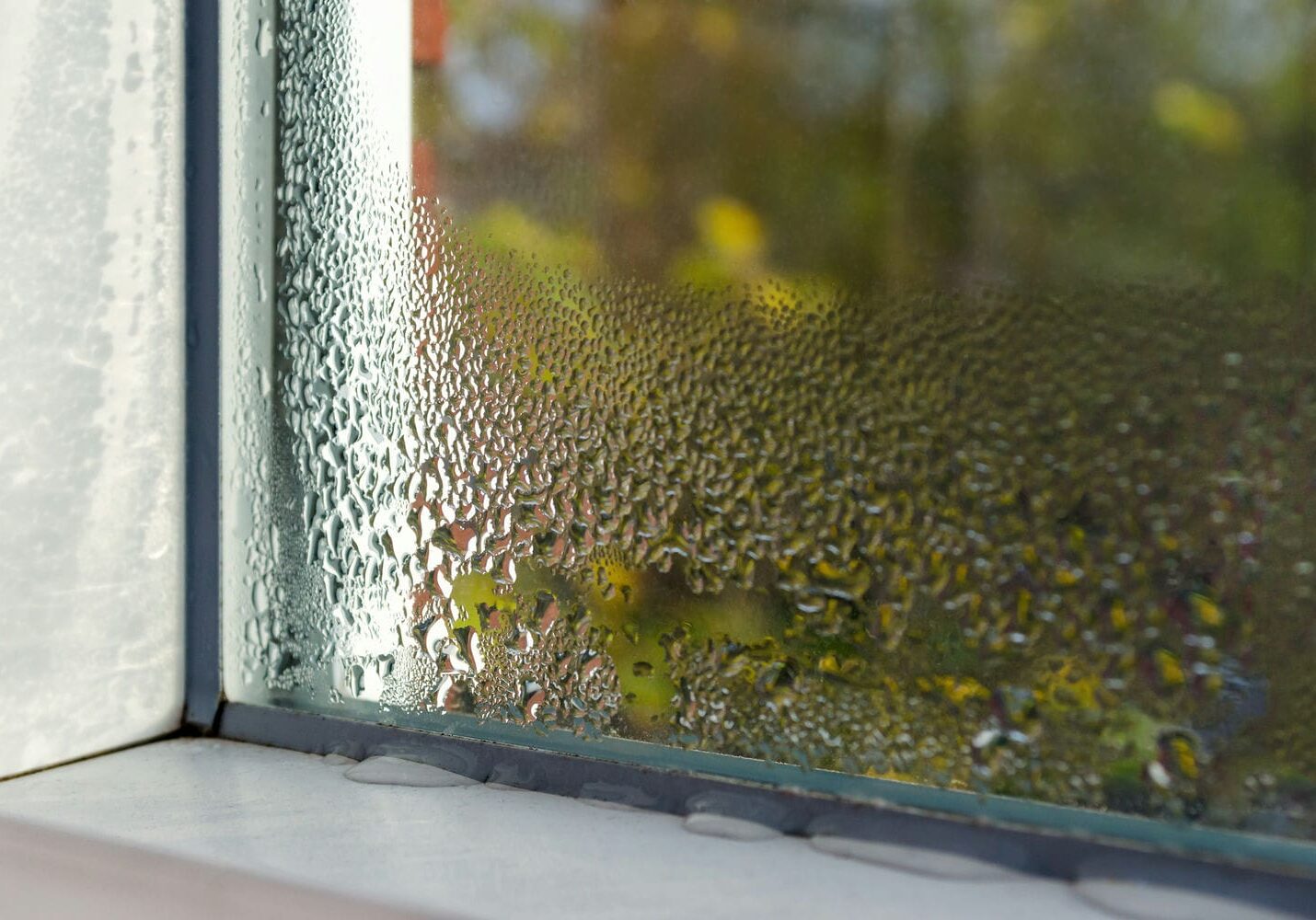
If your house feels humid even with the AC on, the system may be lowering temperature without removing enough moisture. The most common causes are short cycling, oversized equipment, the thermostat fan set to on, dirty filters or coils, refrigerant problems, drainage issues, poor airflow, or moisture entering the home from basements, bathrooms, cooking, laundry, or air leaks. If humidity problems point to a poorly sized or aging cooling system, a proper air conditioner installation should account for correct sizing, airflow, and moisture control.
Here is the catch. Cooling and dehumidifying are connected, but they are not the same thing. Your thermostat may show a comfortable temperature while the air still feels sticky, heavy, or clammy.
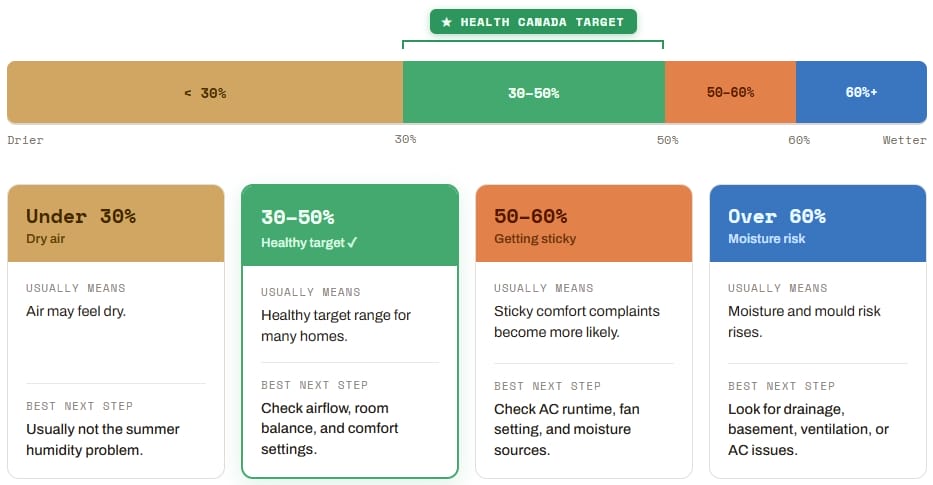
Health Canada’s guidance on indoor humidity and mould recommends keeping relative humidity between 30% and 50%, noting that high moisture can contribute to mould problems. The fastest first step is to measure the humidity with a hygrometer, then check fan settings, airflow, AC runtime, and indoor moisture sources.
Your AC May Be Cooling Without Dehumidifying Enough
Your air conditioner removes humidity when warm indoor air passes over the cold indoor coil. Moisture condenses on the coil, collects in a pan, and drains away. Natural Resources Canada’s air conditioning guidance explains that household air is cooled and dehumidified as it passes over the indoor coil, and the moisture removed from the air is sent to a drain.
That process needs enough runtime, proper airflow, clean equipment, and a working drainage path. If the system shuts off too quickly, runs with the fan set the wrong way, or struggles with maintenance issues, the home can feel damp even while the AC is technically running.
Indoor humidity is the amount of moisture in the air inside your home. Relative humidity compares that moisture to how much the air can hold at that temperature.
Cooling And Dehumidification Are Related, But Not The Same
Cooling lowers air temperature. Dehumidification removes moisture from the air. A good central AC can do both, but it has to run long enough to pull moisture out before the thermostat is satisfied.
A colder thermostat setting does not automatically mean a drier house. If the system cools the thermostat quickly and shuts off, moisture may remain in the air. That is why one house can feel clammy at 22°C while another feels comfortable at the same temperature.
Humidity changes comfort because damp air makes it harder for your body to feel cool. So, the problem may not be the temperature number. It may be the moisture still sitting in the house.
What Indoor Humidity Range Should You Aim For?
Health Canada recommends keeping relative humidity between 30% and 50% and says you can use a hygrometer to measure indoor humidity. That small tool helps you stop guessing and see whether the house is actually too humid.
Measure more than one area if you can. Check the main floor, upstairs, and basement. Ontario homes often show different readings by floor because basements, bathrooms, laundry areas, and upper rooms can behave very differently.
If the reading is reasonable but the house still feels uncomfortable, look at airflow, room balance, and thermostat behaviour. If the reading is high, look at AC performance and moisture sources together.
Indoor Humidity Readings And What They Mean
Indoor humidity readings fall into a few practical bands. The Health Canada target range gives you a useful benchmark, though comfort can also depend on airflow, sun exposure, basement moisture, and how the AC cycles.
| Indoor Reading | What It Usually Means | Best Next Step |
| Under 30% RH | Air may feel dry | Usually not the summer humidity problem |
| 30% To 50% RH | Healthy target range for many homes | Check airflow, room balance, and comfort settings |
| 50% To 60% RH | Sticky comfort complaints become more likely | Check AC runtime, fan setting, and moisture sources |
| Over 60% RH | Moisture and mould risk rises | Look for drainage, basement, ventilation, or AC issues |
If your readings stay above the target range, do not just lower the thermostat. Lower temperature can hide the issue for a while, but it does not fix short cycling, poor airflow, drainage trouble, or moisture entering the home.
Common Reasons Your House Feels Humid With The AC On
Start with what controls runtime. Then look at what controls moisture.
The most common problems are not mysterious. They usually involve fan settings, sizing, airflow, maintenance, refrigerant, drainage, or moisture from the home itself. The smart move is to check these in order instead of assuming you need a bigger AC.
The Thermostat Fan Is Set To “On”
The thermostat fan setting matters. When the fan is set to on, the indoor blower can keep running after the cooling cycle ends. That can move air across a wet indoor coil and push some moisture back into the ductwork and rooms.
Continuous indoor fan operation can re-evaporate moisture removed during compressor operation when the compressor is off, which can increase humidity and discomfort in humid weather.
For normal cooling-season humidity control, set the fan to auto. “On” moves air constantly. “Auto” runs the fan with the cooling cycle.
The AC Is Oversized And Short Cycles
An oversized AC can cool the thermostat quickly and then shut off before it removes enough moisture. That is one of the most common reasons a home feels cold but sticky. Bigger is not always better.
An oversized air conditioner may not stay on long enough to properly dehumidify, while an undersized unit may not handle the cooling load in very hot weather. That is the sizing trap: too large can feel damp, too small can struggle to cool.
If your AC runs in short bursts and the house still feels humid, do not jump straight to a larger replacement. A proper load calculation, airflow review, and installation plan matter more than guessing by square footage.
The AC Is Running, But Not Cooling Well
Humidity often shows up with weak cooling, uneven rooms, long runtimes, or a system that seems to run without changing comfort. If the AC cannot remove enough heat, it may also struggle to remove enough moisture.
Start with the safe checks: thermostat settings, filter condition, open vents, breaker status, and whether the outdoor unit is running. When the air conditioner is running but not cooling well, those first steps are worth working through before any repair work.
If the system is cooling weakly and the house feels damp, service may be needed. The cause could be airflow, refrigerant, coil condition, outdoor-unit performance, or a control issue.
Airflow Is Restricted By A Dirty Filter, Dirty Coil, Or Blocked Vents
Restricted airflow can hurt cooling and moisture removal. A dirty filter, dirty coil, blocked return grille, closed supply vent, or weak blower can keep the system from moving enough air across the indoor coil.
Dirty filters, indoor and outdoor coils, and fans reduce airflow through the system. That reduction lowers efficiency and capacity and can lead to expensive compressor damage if it continues for too long.
Replace or clean the filter first. Open vents. Clear return grilles. Do not disassemble ducts, adjust blower speed, or open the system cabinet unless you are trained to do that work safely.
The Coil May Be Too Cold Or The System May Be Icing
A coil that gets too cold can interrupt normal cooling and moisture removal. Ice on refrigerant lines or around the indoor coil area is a warning sign, not a normal part of summer AC operation.
Ice can come from restricted airflow, low refrigerant, dirty equipment, or other service issues. The house may feel humid because the system is not moving heat and moisture properly, even if air is still coming from the vents.
If you see ice, turn cooling off and call for service. Do not scrape the ice, pour hot water on components, or keep lowering the thermostat.
Low Refrigerant Can Reduce Cooling And Moisture Removal
Low refrigerant can cause weak cooling, long runtimes, icing, or warm air. Those symptoms can also come from other causes, so do not assume the system just needs a “top-up.”
A small loss of refrigerant can cause a significant drop in efficiency, and leaks should be repaired with refrigerant recovered during service rather than simply topped up.
If low refrigerant is a possibility, knowing the signs of an air conditioner refrigerant leak helps before assuming the cause. Refrigerant should be diagnosed properly, not guessed at.
Drainage Or Condensate Problems Are Leaving Moisture Behind
Your AC removes moisture by condensing it on the indoor coil and draining it away. If the drain pan, drain line, pump, or drainage path is clogged or failing, you may notice water problems, musty smells, or poor moisture handling.
This does not always mean the AC is not cooling. Sometimes the system is removing moisture but not draining it properly. That can create a different comfort and maintenance problem.
Do not open the air handler, drain pan, or condensate components if you are unsure what you are touching. If water is backing up, a safety switch is tripping, or there is visible moisture near indoor equipment, book service.
The Home Is Adding Moisture Faster Than The AC Can Remove It
Sometimes the AC is not the only issue. Cooking without a range hood, long showers, bathroom fans that are not used, wet basements, foundation leaks, open windows, air leakage, drying laundry indoors, and poor ventilation can all add moisture faster than the AC can remove it.
Daily activities such as showering, washing clothes, and cooking are common indoor moisture sources, especially when kitchen and bathroom exhaust fans are not working properly, not vented outside, or not used. Using exhaust fans, repairing leaks, and maintaining relative humidity between 30% and 50% all help.
This is common in Kitchener-Waterloo homes with basements. The AC may be doing its job upstairs while the basement is still feeding moisture into the house.
How To Tell Whether It Is An AC Problem Or A House Moisture Problem
You do not need to guess. Use a simple process.
Measure humidity. Watch how the AC runs. Check where the house feels damp. Look for water, musty smells, and ventilation issues. Then call for service if the pattern points back to the cooling system.
Measure The Humidity First
Buy or borrow a basic hygrometer and take readings in more than one area. Check the main floor, upstairs, and basement if possible. Write the readings down instead of relying only on how the air feels.
Health Canada says a hygrometer can be used to measure humidity, and that a dehumidifier or air conditioner can be used to reduce humidity when needed.
If the whole house is high, look at AC runtime, fan settings, and moisture sources. If only the basement is high, start with basement moisture, drainage, air movement, and dehumidification.
Watch Whether The AC Runs Long Enough
Humidity control needs runtime. If the AC runs for very short cycles, it may be cooling the thermostat before it has time to remove much moisture. That often happens with oversized systems or control issues.
Short cycles cool the thermostat. Longer, controlled cycles help remove moisture.
Watch the system on a humid day. If it starts, runs briefly, shuts off, and repeats often while the house still feels sticky, the humidity issue may be tied to equipment sizing, controls, airflow, or a service problem.
Check Whether The Problem Is Whole-Home Or Room-Specific
A humid upstairs, damp basement, sticky addition, and whole-home humidity problem can point to different causes. Whole-home humidity may point to fan settings, short cycling, high moisture load, or AC performance. Basement-only humidity may point to foundation moisture, poor air movement, or a need for basement dehumidification.
Compare rooms and floors. Note when the problem gets worse. Humidity that spikes after showers or cooking points toward ventilation habits. Humidity that never drops even during long AC runs points more strongly to system or building moisture issues.
This is where patterns matter. One sticky room is not the same as a whole-home moisture problem.
Look For Water, Musty Smells, Or Condensation
Musty odours, condensation on windows, damp basement materials, water near the air handler, or recurring moisture stains can mean the issue is bigger than thermostat comfort.
Mould can grow where moisture is present, including from daily indoor activities, leaks, condensation, flooding, and inadequate ventilation, so moisture problems should be fixed promptly so mould does not return.
Do not diagnose mould from smell alone. But do treat persistent moisture as a real problem, not just a comfort annoyance.
What You Can Safely Try Before Booking Service
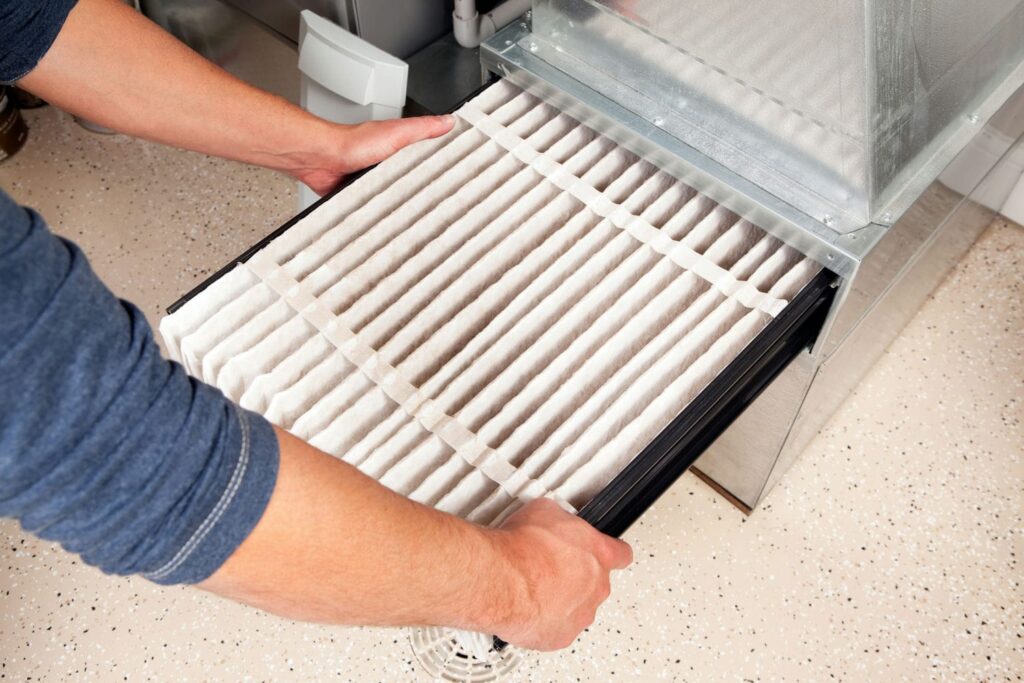
You can adjust controls, restore airflow, reduce moisture sources, and measure humidity. You should not open AC cabinets, handle refrigerant, bypass drainage controls, or try to diagnose internal electrical or refrigerant parts.
Start with the low-risk fixes. They often reveal whether the issue is a simple setting, a house moisture habit, or a system problem that needs a technician.
Set The Fan To Auto
Set the thermostat fan to auto during cooling season. This lets the indoor blower run with the cooling cycle instead of moving air constantly after the coil is wet.
This is one of the simplest fixes for sticky homes. Try it for a few days while tracking humidity readings. If the house starts feeling drier, the fan setting was likely part of the problem.
If the home still feels humid, keep going. Fan setting is important, but it is not the only possible cause.
Replace The Filter And Open Vents
Replace or clean the filter if it is dirty. Open supply vents. Clear return grilles. Move furniture, rugs, curtains, or storage away from registers.
Better airflow helps the AC cool and dehumidify more consistently. It also reduces strain on the system.
Do not adjust blower speed or open internal panels as a homeowner fix. If airflow still seems weak after simple checks, service should take over.
Reduce Moisture At The Source
Use bathroom exhaust fans during showers and for a short time after. Use the kitchen range hood when cooking, as long as it vents outside. Keep windows closed during humid weather when the AC is running.
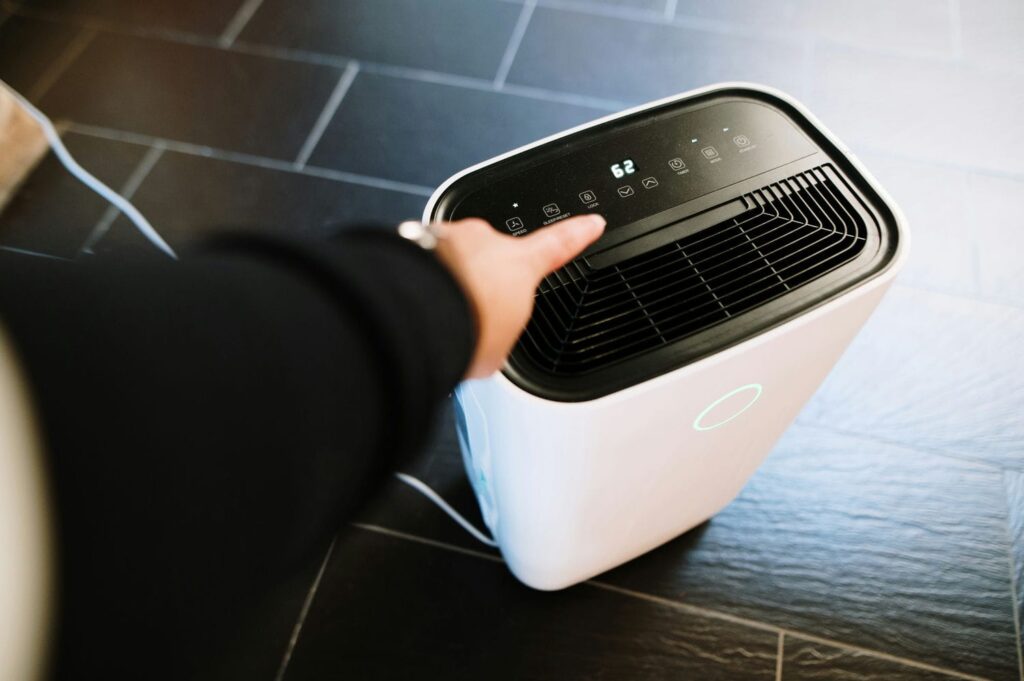
Avoid drying clothes indoors if the home already feels damp. Check basement moisture. Run a basement dehumidifier if that area is the main problem. Repair plumbing or foundation leaks promptly.
Health Canada recommends using kitchen and bathroom exhaust fans, making sure dryers and fans vent outdoors, repairing water leaks, and using a dehumidifier if needed to control humidity.
Check The Outdoor Unit And Drain Area Visually
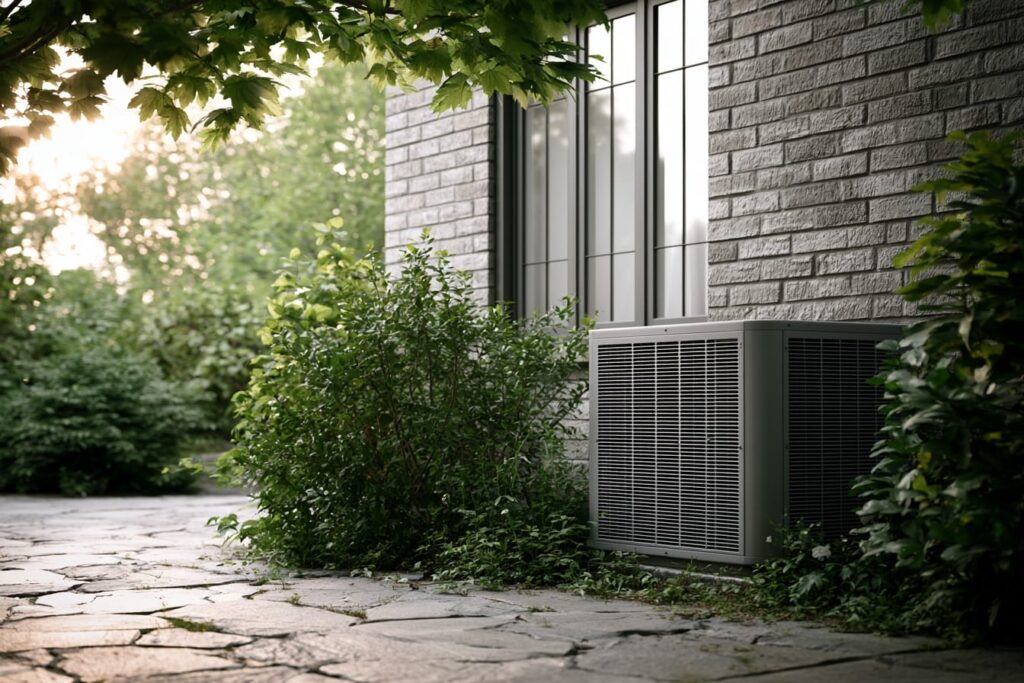
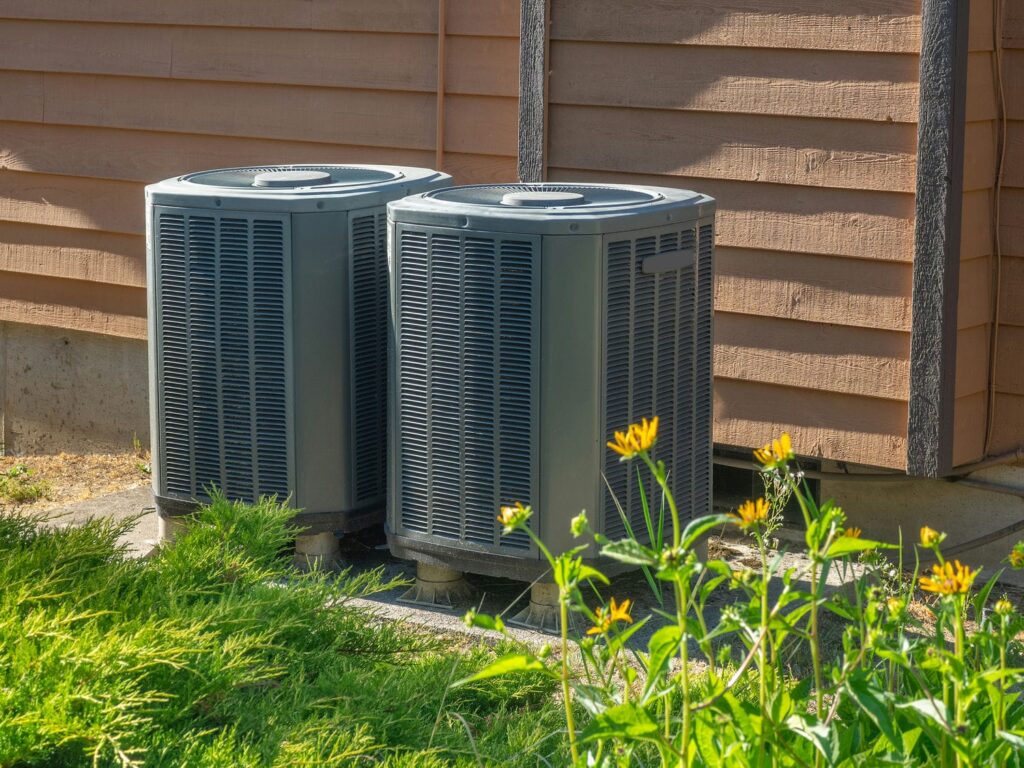
Look for obvious outdoor blockage around the condenser. Leaves, grass clippings, weeds, and debris can reduce airflow. Clear the outside area if it is safe.
Indoors, look for visible water near the furnace, air handler, drain line, or condensate pump area. Do not open the cabinet or pour chemicals into the drain unless the manufacturer or a technician tells you to.
If water is backing up, a safety switch is tripping, or you see recurring moisture near the indoor equipment, book service. Drainage problems can create water damage and comfort issues if ignored.
Track Humidity Before And After Changes
Track readings for 3 days. Record indoor humidity in the morning and evening. Note the thermostat setting, fan setting, outdoor weather, and whether the AC runs in short bursts or longer cycles.
Also note showers, cooking, laundry, open windows, and basement conditions. These details help separate house moisture from AC performance.
If humidity stays high after fan, filter, airflow, and moisture-source changes, call for service. A clear record helps the technician diagnose faster.
When Humidity Means You Should Call For AC Service

Call for service when the house stays humid after fan, filter, vent, and moisture-source checks. Also call when humidity comes with weak cooling, warm air, ice, water problems, short cycling, or an older AC that is losing comfort control.
A sticky house can be a simple settings issue. It can also be the first clear sign that the system is not controlling comfort anymore.
Call If The AC Is Short Cycling
Short cycling means the AC turns on, runs briefly, shuts off, and repeats. That can hurt humidity control because the system does not run long enough to pull moisture out of the air.
Possible causes include oversizing, thermostat issues, control problems, airflow restriction, refrigerant problems, or equipment faults. The point is not to guess the part. The point is that short cycling needs attention.
If the system short cycles and the house feels sticky, service should confirm why it is shutting off early.
Call If The AC Runs Constantly But The House Still Feels Damp
Constant runtime with poor humidity control is a different warning sign. It can point to poor cooling performance, weak airflow, refrigerant trouble, duct problems, or a moisture load the AC cannot overcome.
A system that works hard but does not deliver comfort should not be ignored. It is costing you hydro without fixing the problem.
If your AC seems to run but does not cool or dry the home properly, the same safe checks for weak cooling are the right place to start before booking service.
Call If You Get Warm Air, Ice, Or Weak Cooling
Humidity plus warm air, ice, or weak cooling is a stronger service signal. It means the system may not be removing heat or moisture properly.
When warm air is coming from the AC vents, that points to a more specific fault worth checking on its own. If you also see ice, hear hissing, or suspect low refrigerant, treat those as service signals rather than something to diagnose yourself.
Do not keep lowering the thermostat if the system is icing or blowing warm air. Shut cooling off when needed and get the cause diagnosed.
Call If The AC Is Older And Comfort Is Getting Worse
Older AC systems can still run while losing comfort control. The system may turn on, move air, and lower the temperature somewhat, but humidity control keeps getting worse.
That pattern matters. Humidity, weak cooling, longer runtimes, rising hydro use, and frequent service calls can all point to declining performance.
If your system is older and no longer keeping the home comfortable, the expected lifespan of a central air conditioner in Ontario helps you judge when replacement planning starts to make sense.
Repair Or Replace: When Humidity Points To A Bigger AC Problem
Humidity does not automatically mean you need a new AC. Many causes are repairable, especially if the issue is maintenance, controls, airflow, drainage, or a correctable refrigerant problem.
However, humidity can point to a bigger design or age problem. The best filter is runtime, performance, and age: how the system runs, how well it controls comfort, and where it sits in its expected service life.
Repair May Make Sense When The Cause Is Maintenance Or A Part Issue
Repair may make sense if the humidity problem comes from a dirty filter, dirty coil, blower issue, drainage problem, thermostat setting, or properly repairable refrigerant issue. In those cases, the system may still be fundamentally sound.
A comfort problem caused by a correctable fault is usually a repair conversation.
The key is confirmation. The repair should restore both cooling and moisture control. If it only improves the temperature while the house still feels sticky, the diagnosis may not be complete.
Replacement Becomes More Likely When The AC Is Poorly Sized Or Aging
Replacement becomes more likely when the system is oversized, short cycles constantly, cannot control humidity, is older, or has repeated cooling issues. In that case, the issue may not be one broken part. It may be the wrong system for the home or a system nearing the end of useful service.
Proper central AC sizing should use a recognized sizing method rather than a rule of thumb, since equipment that is too large struggles to dehumidify and equipment that is too small struggles to cool.
Do not replace a system just because the house feels sticky once. But do take repeated humidity problems seriously when they match age, short cycling, weak cooling, or poor reliability.
If Replacement Is On The Table, Compare Fit Before Features
If replacement is likely, compare fit before features. Humidity control depends on sizing, airflow, equipment match, blower setup, staging, duct condition, drainage, and installation quality.
A better spec sheet does not fix a bad fit.
Efficiency also matters, but it should not be the only factor. When comparing new systems, understanding what SEER2 ratings mean for air conditioners helps you weigh efficiency without letting it take over the whole decision.
Get Help Sorting Settings From System Problems
If your house still feels humid with the AC on, do not jump straight to a bigger unit or keep lowering the thermostat. Start with fan settings, airflow, humidity readings, and moisture sources, then get the system checked if comfort still feels off.
Local Heating and Cooling has served homeowners for over 10 years, is an Authorized Lennox Dealer, and has offices in Kitchener and Waterloo. We help homeowners separate simple settings and maintenance problems from sizing, repair, and replacement decisions.
If fan settings, filter changes, vent checks, and moisture-source fixes do not help, reaching out for a proper AC diagnosis is the right next step.
If humidity points to a poorly sized or aging system that no longer makes sense to repair, our team at Local Heating and Cooling can walk you through air conditioner installation options sized for proper moisture control.
Frequently Asked Questions
The most common reasons are short cycling, an oversized AC, the thermostat fan set to on, dirty filters or coils, weak airflow, low refrigerant, drainage problems, or moisture entering from bathrooms, cooking, laundry, basements, or air leaks. The first step is to measure humidity with a hygrometer, then check fan setting, airflow, runtime, and indoor moisture sources.
Health Canada recommends keeping indoor relative humidity between 30% and 50%, and a hygrometer is the easiest way to confirm whether the house is actually too humid. If readings stay above the target range, look at AC runtime, fan setting, airflow, basement moisture, and indoor moisture sources together.
Set the fan to auto for normal cooling season humidity control. The on setting can keep the indoor blower running after the cooling cycle ends, which may re-evaporate moisture off the coil and make the home feel stickier.
Yes. An oversized AC can cool the thermostat too quickly and shut off before it removes enough moisture, which is why a home can feel cold but sticky. A proper load calculation matters more than choosing a bigger unit by square footage.
It can contribute. Low refrigerant can reduce cooling performance, create longer run times, and sometimes lead to icing, all of which can hurt moisture removal. However, humidity problems can have several causes, so refrigerant should be diagnosed by a technician rather than guessed at or topped up without finding the cause.
Basements can stay humid because of foundation moisture, poor air movement, condensation, leaks, or outdoor humidity entering the home, so a basement dehumidifier, moisture repair, and better airflow may be needed even if the central AC is working. If only the basement is humid, start there; if the whole home is humid, look at system runtime, AC performance, fan setting, and indoor moisture sources.
Call for service if humidity stays high after setting the fan to auto, replacing the filter, opening vents, and reducing moisture sources, or if humidity comes with weak cooling, warm air, ice, water near the indoor unit, short cycling, or an older AC that is losing comfort control. At that point a proper diagnosis should check airflow, coil condition, drainage, refrigerant, runtime, and equipment fit.