

When a Sealed House Cannot Breathe
You wipe the glass in the morning and by lunch the windows are streaming again. There is black speckling along the bottom of a window frame, and last night's dinner is still in the hallway.
Your home is doing what a well sealed home does. New builds go up airtight and older homes get there through new windows and air sealing, so the water that showers, cooking and laundry put into the air has nowhere to go.

What an air exchanger actually does
An air exchanger, or HRV, moves that wet, stale air outside and draws fresh air in, which is where any real plan for indoor air quality begins. An air exchanger changes the air in your home rather than cleaning it, so dust and pollen stay the job of your furnace filters.
How we size and balance it
We start by measuring the airflow your home needs, then size the unit to the moisture it produces and the rooms it serves. On install day we run the ducts, seal the hoods, and balance supply against exhaust so the fan moves the air its label promises. You keep the readings from every HRV installation we do.
HRV or ERV: Which One Suits Your Home?
| Feature | HRV heat recovery ventilator | ERV energy recovery ventilator |
|---|---|---|
| What it moves | An HRV moves heat from the outgoing air into the fresh air coming in. | An ERV moves that heat and carries a share of the moisture with it. |
| Where it suits | It suits a busy household that runs humid in winter. | It suits a smaller sealed home that would otherwise feel dry in winter. |
| The winter tell | You find water on the glass most mornings. | Your windows stay clear, though the air thins while it runs. |
| What this climate asks for | An HRV answers it in most Ontario homes. | An ERV is the exception, and we choose it on the house. |
Most homes around here are better served by an HRV, and if your windows run with water in February that is the box we will recommend after we see it.
What an HRV Installation Includes

New Construction
Your builder or your inspector has told you the home needs mechanical ventilation. We plan dedicated supply and exhaust runs to the bedrooms, bathrooms and kitchen while the walls are open, then install and commission the unit with the rest of the mechanicals. An HRV installation at framing stage is cleaner and better balanced than a retrofit.
Adding One to an Existing Home
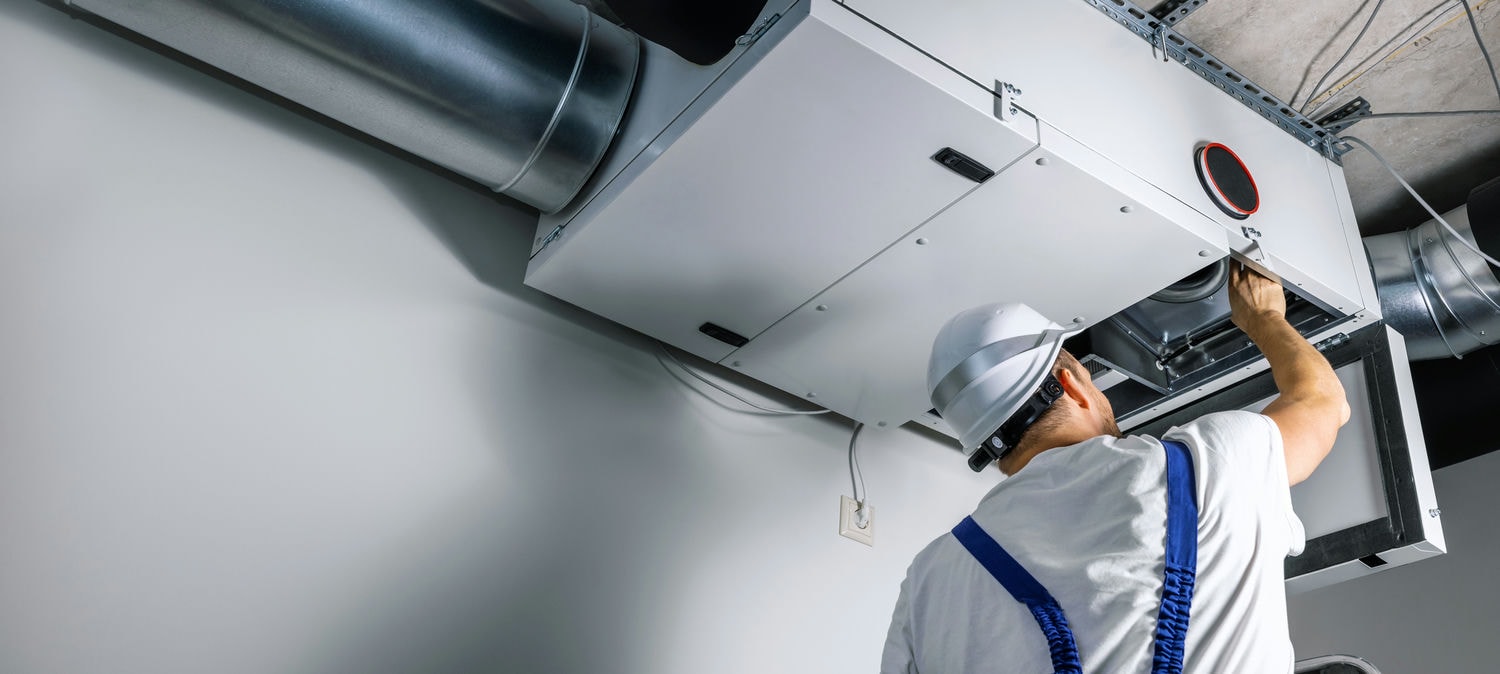
If you heat with forced air, most of the ductwork you need is already in your basement. We tie the fresh air supply into the furnace return, run exhaust from the wet rooms, cut and seal two hoods through an exterior wall, and set the control where you will use it. Most retrofits take a single day.
Every install finishes the same way. We size the HRV or ERV to your home rather than a rule of thumb, balance supply against exhaust, and hand you the commissioning readings. Balanced airflow keeps moist air out of your walls and the system quiet through the coldest months.
Ontario Requires Mechanical Ventilation, and an HRV Is How Most Homes Meet It
Ontario's Building Code requires every dwelling unit supplied with electrical power to have a mechanical ventilation system, and an HRV or ERV is how most Ontario homes meet it while recovering the heat that would otherwise go out the exhaust. The requirement sits in O. Reg. 163/24 under the Building Code Act, 1992, which adopts the National Building Code of Canada 2020 with Ontario amendments.
We install to that standard on new builds and retrofits alike, and we are glad to walk you through the regulation before you decide anything.
Why Choose Us for Your HRV Installation?
You want ventilation that works quietly in the background and a team that still picks up the phone in five years. We install HRV and ERV systems across Kitchener-Waterloo, commission every one, and stand behind the work.
- We have been in business for over 10 years, installing and servicing HVAC systems in homes across this region.
- We are a five-time HomeStars Best of Award winner, in 2019, 2020, 2021, 2023 and 2024.
- We are an Authorized Lennox Dealer, so the equipment we install comes with factory support, parts and a proper warranty.

I booked a consultation of our HVAC system after experiencing some excessive moisture on the windows. Sina was here in good time for this non-emergency, and was very informative and helpful. He was honest and told me the HVAC was in very good shape - didn't try to sell us any work.
Cathy H, Google reviewOur HRV Installation Process
Here is how we handle an installation, from the first look at your home to the readings we leave with you.
We look at your home.
We check how it behaves through the winter, where the moisture comes from, and where a unit can hang.
We recommend HRV or ERV, and size it.
You get the airflow your home needs in writing before we quote a price.
We install it.
We run new ducts or tie into your furnace return, then cut and seal the exterior hoods.
We balance and commission it.
We match supply to exhaust, measure the result, and leave the readings with you.
Where We Install Air Exchangers
Our installers cover Waterloo Region and reach out into Wellington, Perth and Oxford counties, and the same crew that sizes your system is the one that comes back to commission it. Give us a call with your address before you assume you are too far out, because our HRV and ERV installation usually travels further than people expect.
