
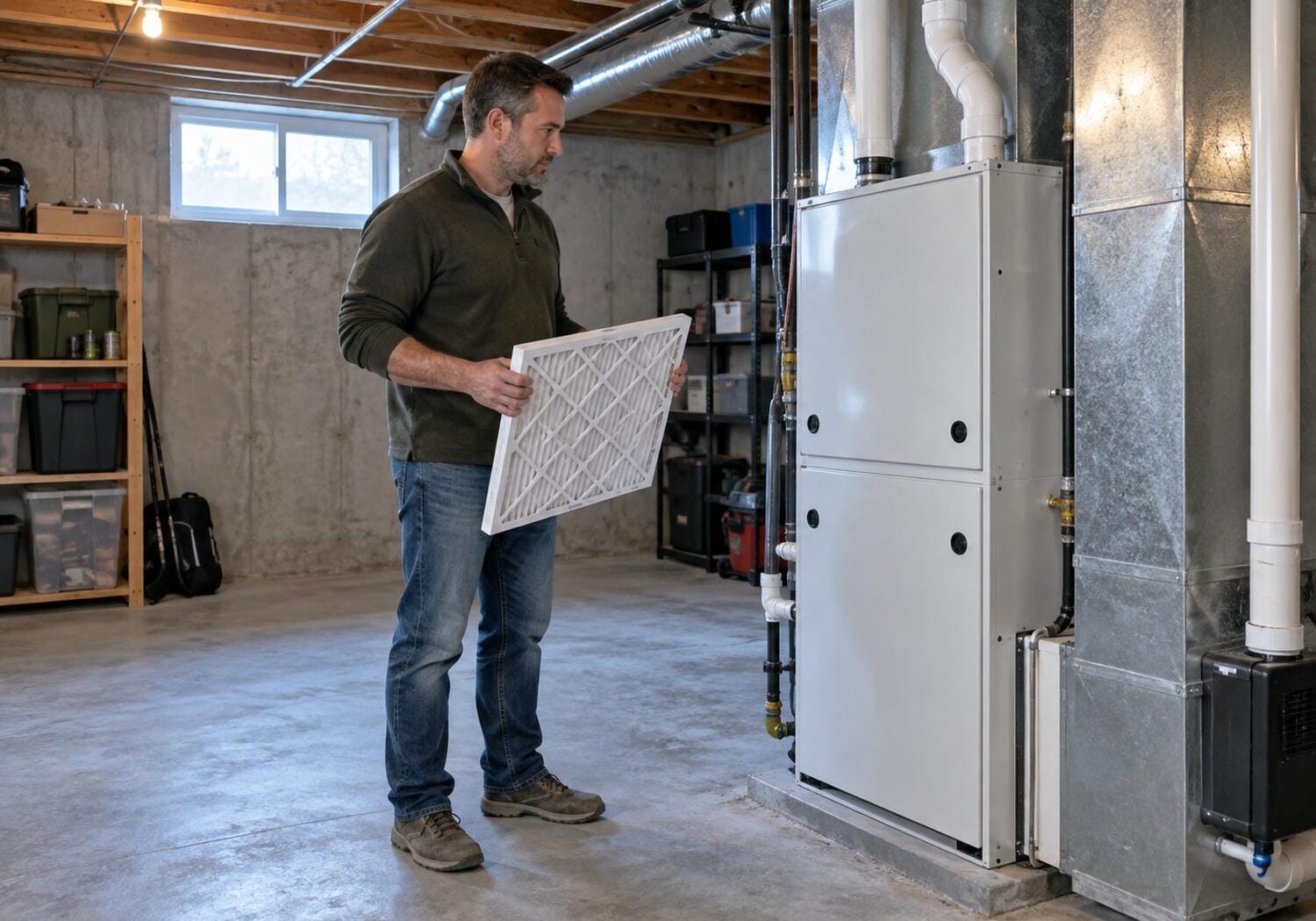
A furnace not working after changing the filter is usually a two-minute fix. The likeliest cause is a blower door that is not fully seated, because an open door cuts power to the furnace. The next is the furnace power switch, still off after you opened the cabinet.
A furnace that refuses to start is usually a furnace working exactly as designed, because something in its safety chain is open. Faults that are not this simple need a furnace diagnosis rather than a guess. If those checks do not fix it, the filter change may have uncovered a fault that was already there.
Start with power.
Read the Symptom First
The useful question is whether the burners ever lit. If they lit, ran a few minutes, then went quiet while the fan carried on, that is a restriction problem, and it is the one you can still fix yourself. If the fan runs and the burners never light, or the vents blow cool air with no burner cycle, that is a furnace running but no heat, and that is where to start. If you are still here, work out which of these you have before you touch anything.
| What you see or hear | What it usually means | Who fixes it, and how |
| Nothing at all. No fan, no lights, no click | Power to the furnace is interrupted. Usually the blower door is not fully seated, or the power switch is still off | You. Seat the panel, put every screw back, then switch the power back on |
| The burners light, it runs a few minutes, the burners go quiet, the fan keeps blowing | Airflow is restricted and the high limit has cut the gas. The new filter is denser, the wrong size, or not sitting flat | You. Refit or swap the filter, and call a technician if the same shutdown repeats |
| The breaker trips | The furnace is drawing more current than normal, or there is an electrical fault | You, one reset only. A second trip is a diagnosis, not a reset |
| Still nothing, even though the filter is now right | The control board has stopped trying and is waiting | You. A brief power off clears it. A repeat lockout needs a technician |
A Silent Furnace Points at Power, Not the Filter
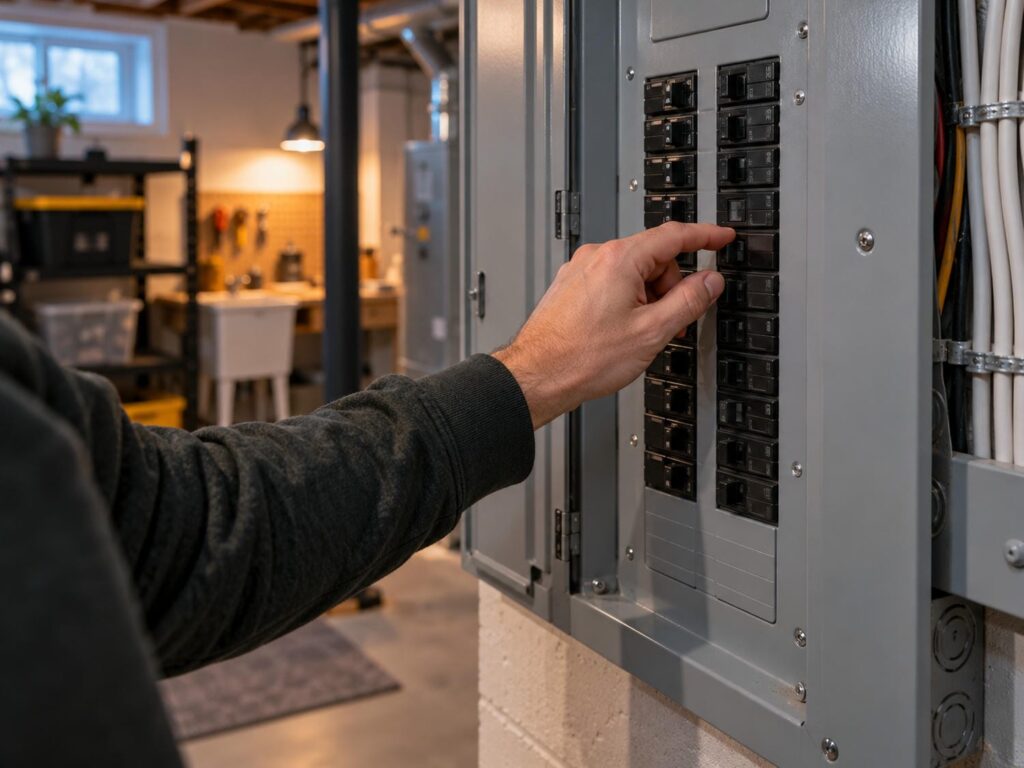
Dead and silent means the furnace never got the chance to try, so the filter does not explain it. A furnace that will not turn on at all has other causes. These two are the ones your filter change could have caused. If you changed a thermostat battery on the same afternoon, glance at the screen before you go near the panel. And if the power checks out and it is still silent, the furnace may have stopped trying, and a brief power cut clears that.
The Blower Door Has to Be Fully Closed
On many furnaces the filter sits behind or beside the blower door. That door presses a small switch, and that switch lets power reach the controls and the gas valve.
Here is the catch. A panel that is on but not seated, or on with one screw missing so it stands a few millimetres proud, leaves the furnace dead and looks closed from across the room.
It is not a convenience switch: with the blower compartment open, the furnace could pull combustion gases into the air it sends through the house. Seat the panel flat, replace every screw, then check again.
The Furnace Power Switch, and the Breaker
The furnace has its own power switch, usually on or beside the cabinet, often looking like a light switch, sometimes unlabelled. Turning it off before you open the furnace is correct. Turning it back on is the step people miss.
Then the breaker. In most houses the furnace has its own circuit, and in older houses around Kitchener and Waterloo it may share one. Reset it once to rule out a nuisance trip. If it trips again, stop: a breaker is a fire-prevention device, and a furnace that keeps tripping one is telling you something a reset will not fix.
It Ran for a Few Minutes and Then the Burners Quit
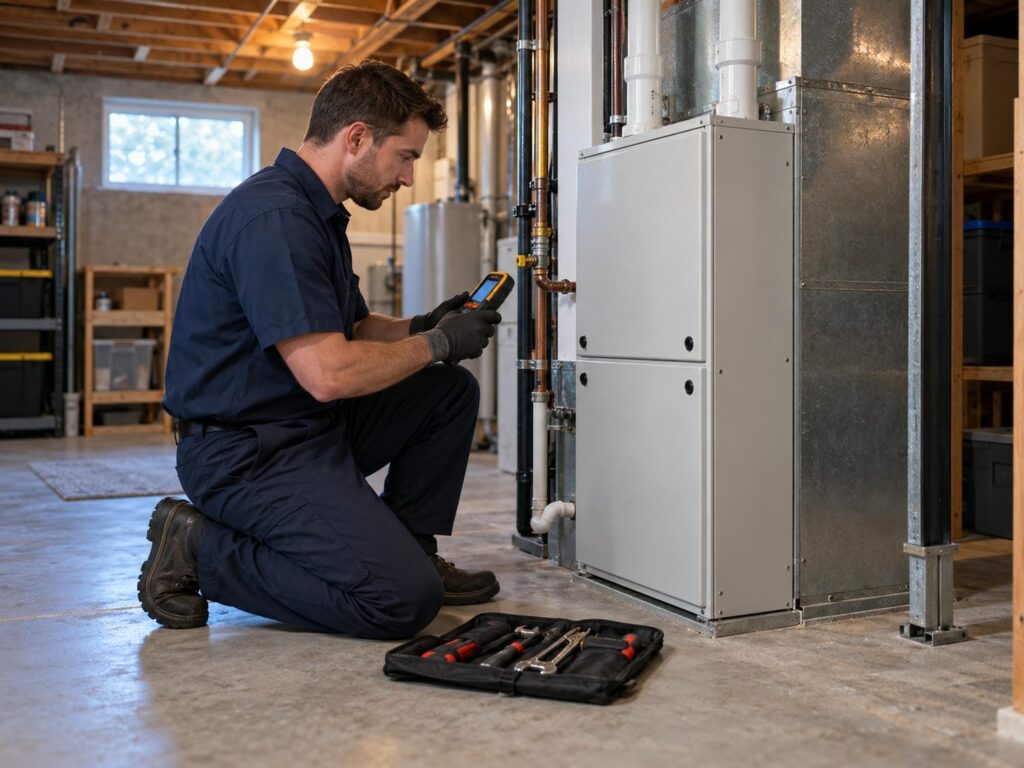
A furnace protects itself when too little air crosses the heat exchanger: it cuts the gas and keeps the fan running. So burners out with the fan still blowing is the clue, and this time the filter is a real suspect.
A Brand New Filter Can Still Starve the Furnace
A new filter is the least restrictive that filter will ever be. So if a restriction fault shows up the day you changed it, the change introduced the restriction. The new filter is denser than what came out, smaller in face area, wrong for the slot, or not sitting flat.
The high limit is a temperature switch that watches the air leaving the furnace. Starve it of return air and nothing cool moves across the heat exchanger to carry the heat away. Temperatures climb, so that switch cuts the gas and runs the blower to cool things down.
Size and Fit: Getting the Filter to Seal
A filter only works if it seals against its rack. But leave a gap and air goes around it instead of through it, so the filter stays clean while the blower and the coil get dirty. Force an oversized one in and you crush the pleats. Right size, flat, clips closed.
And buy the size printed on the old filter, not the size your tape measure says.
What the MERV Number Does Not Tell You
The number on the box is the MERV rating, which scores how much fine dust the filter traps. However, it is a filtration number, not a resistance number. A higher rating does not automatically mean a harder pull. Thickness and pleat area matter more.
Three filters from one maker can carry the same rating and still be rated for different resistance at the same airflow. The US Department of Energy has the 1 inch of the three as the most restrictive and the 4 inch as the least. So a deeper filter with more pleat area can filter better and breathe easier. Choosing furnace filters gets easier once you read the box that way.
Why It Stays Dead Even After You Fix the Filter
After a few failed starts it stops trying and waits. Here is the catch. Once it has locked out, fixing the filter does not restart it on its own. Cut the power at the furnace switch for a few seconds, or turn the thermostat off and on, and it clears. A second lockout is a diagnosis.
If it starts and stops repeatedly after the filter is right, that is short cycling.
The Filter Arrow: Worth Turning Around, but Rarely Why a Furnace Stops
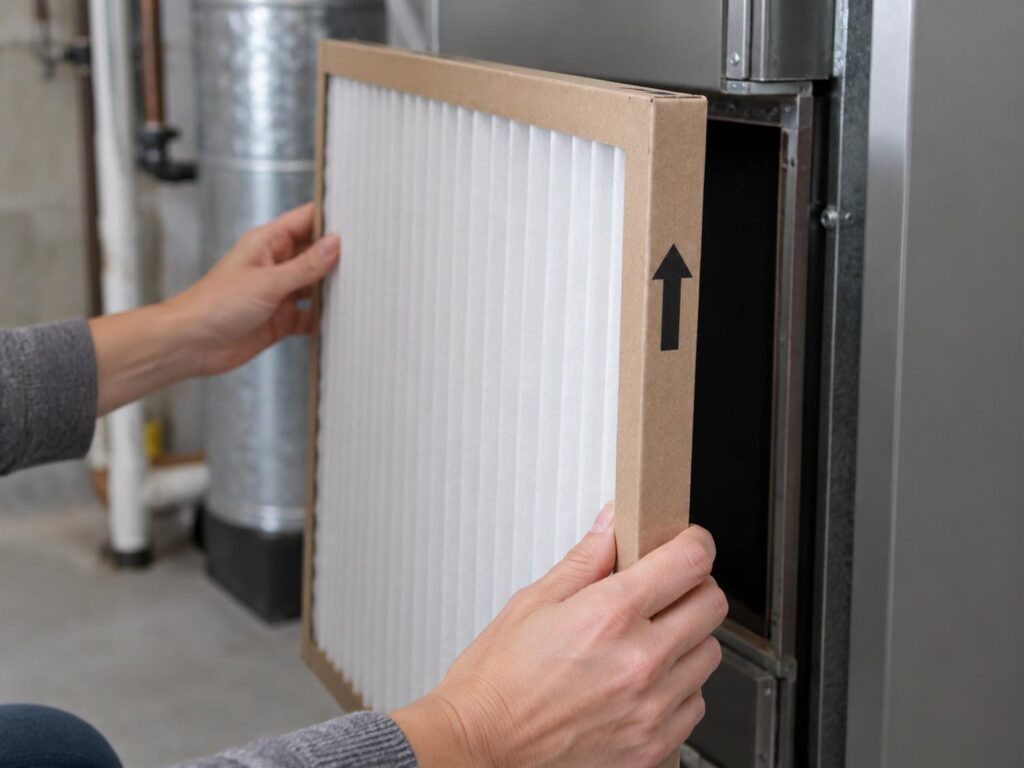
Arrows on a filter show which way the air travels, toward the furnace and away from the house. Lennox prints the arrow on its filters. Fitted backwards, a pleated filter catches less and resists more, so take 30 seconds to turn it around. But it is rarely why a furnace has stopped altogether.
The one real risk is mechanical: braced the wrong way, a pleat pack can bow under the fan’s pull, and a thin filter can shift in its rack.
How Often the Filter Actually Needs Changing
Natural Resources Canada tells homeowners to change or clean the filter every three months, or sooner as filters load up. Three months is the figure for standard one-inch disposable filters.
A four- or five-inch media filter in a cabinet runs on a different schedule, and a house with pets, allergies or a renovation on the go loads a filter faster than the calendar suggests. So check it rather than trusting the date.
What You Can Safely Do, and Where the Line Is in Ontario
Four things are yours: turn the power switch back on, seat the access panel properly, refit or replace the filter correctly, and reset the breaker once. All four need nothing but a screwdriver, and there is no fifth. Past those four, only a certified technician should open the furnace, for two reasons: the law and carbon monoxide.
Gas Work in Ontario Needs a Certificate
In Ontario, work on a natural gas appliance needs a certificate. TSSA runs that system. A current certificate means the person is legally allowed to open your furnace, which is not the same as being handy.
So check before anyone arrives. The list of registered heating fuel contractors is public, and a registered contractor has to hire certified technicians for the job. Look up the company. Then ask the technician to show you their certificate at the door.
Overheating that keeps happening can also come from gas pressure at the manifold, and that is work nobody without a certificate may touch.
If a Carbon Monoxide Alarm Sounds
An alarm sounding is not a diagnostic step. Waterloo Fire Rescue’s instruction is three steps, and they are the whole answer: get out, call 911 from outside, and stay out until firefighters say it is safe.
A gas furnace is a fuel-burning appliance, so every house with one needs CO alarms, adjacent to each sleeping area and on every storey. The every storey part is broader than the older version of the rule, so alarms put in years ago may be a storey short.
When to Stop Checking and Book a Diagnosis
These four checks cost nothing and take two minutes. That said, they cannot measure anything. We find out whether a filter suits a system by measuring static pressure on the supply and return sides with a gauge. A homeowner cannot take that reading. We can, in one visit.
A diagnosis visit is a paid call, at one price, and parts push it higher.
Local Heating and Cooling has worked on furnaces here for over 10 years, from offices in Kitchener and Waterloo, and as an Authorized Lennox Dealer we know what is in most of these basements. If your checks come up empty, book a furnace repair or contact our Kitchener and Waterloo team, and we will take the reading. And once a year, have a registered contractor look at your fuel-burning appliances.
Frequently Asked Questions
Indirectly yes, but rarely on its own. The usual culprits are what you moved to reach it: the access panel and the power switch. A restrictive or badly fitted filter can trip the overheat protection minutes into a cycle.
A furnace that refuses to start is usually its safety chain doing exactly what it was designed to do. The genuinely urgent situation is different: if a CO alarm sounds, get out and call 911 from outside. The panel and the switch are safe to check yourself.
Your filter sits in the air coming back from the house. The pressure switch watches the other side of the furnace, where exhaust leaves through the vent. So a pressure switch fault points at the venting, not at the filter, and it is one for a technician rather than for you.
For an hour while you buy the right one, that is your call. As a habit, no: the filter keeps dust off the blower wheel and the coil, and running without one moves that dirt into the equipment, where cleaning it becomes a service call.
Not by itself. The rating is about what the filter catches, not how hard the blower works to pull air through it. The real limit is what your own furnace and ductwork can carry, and that takes a reading rather than a guess.
Cut the power at the furnace switch for a few seconds, or turn the thermostat off and back on. Fix the cause first, or it simply stops again. A furnace that locks out twice needs someone with a gauge, not a third reset.