
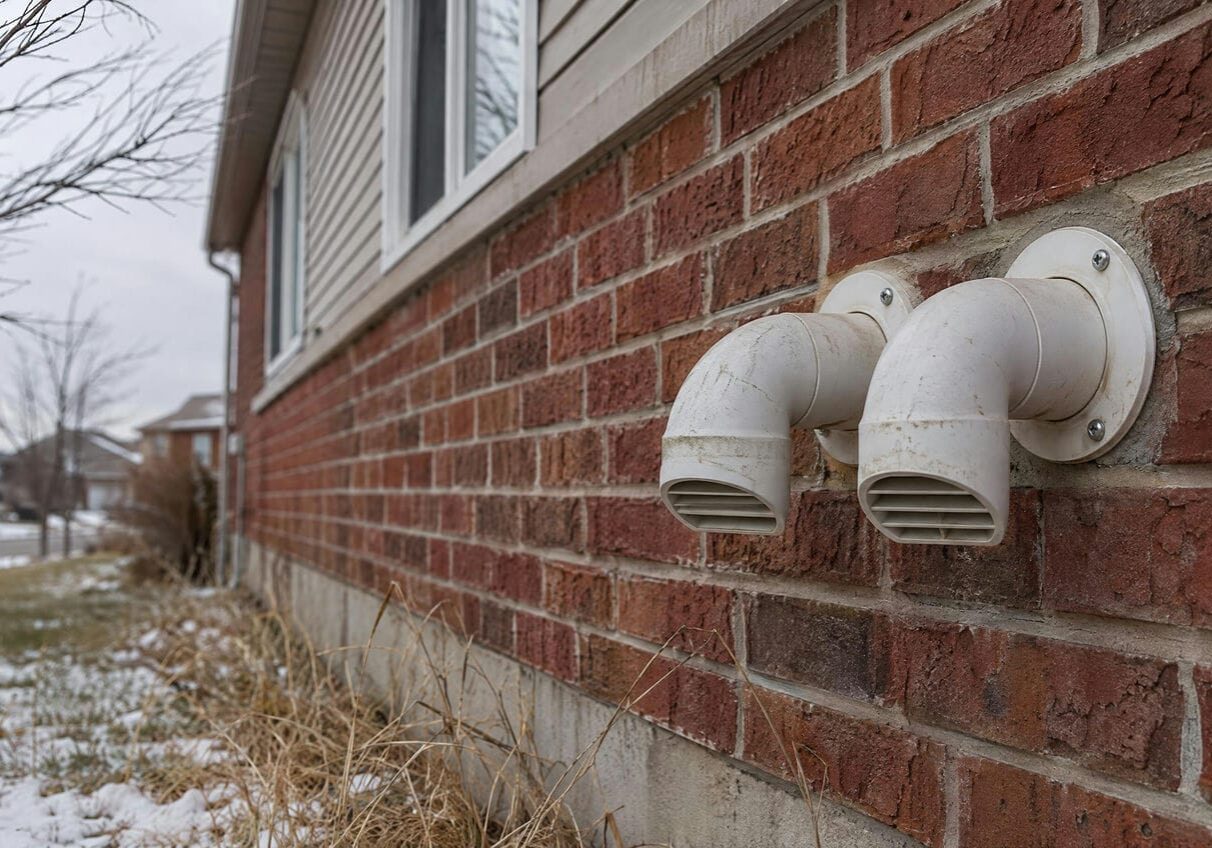
If your furnace shuts off when windy, the wind is not blowing the flame out. Wind changes the air pressure at the point where your furnace’s pipes come through the wall, a switch inside the furnace reads that the exhaust is not moving the way it should, and the control board closes the gas valve. That is why the furnace starts, runs for a while, and then stops. The cause is outside the house, and that is where a furnace diagnosis starts on a fault that only shows up in the wind.
If you have not yet matched the failures to the weather, establish the pattern first, because a furnace that works intermittently can be failing for several reasons and wind is only one of them.
Wind-related shutdowns come down to five things: the pressure at the wall, which of the two kinds of furnace you have, where the vent terminates, what can be changed at it, and where the safety line falls.
Why Wind Stops a Furnace That Runs Fine on a Calm Day
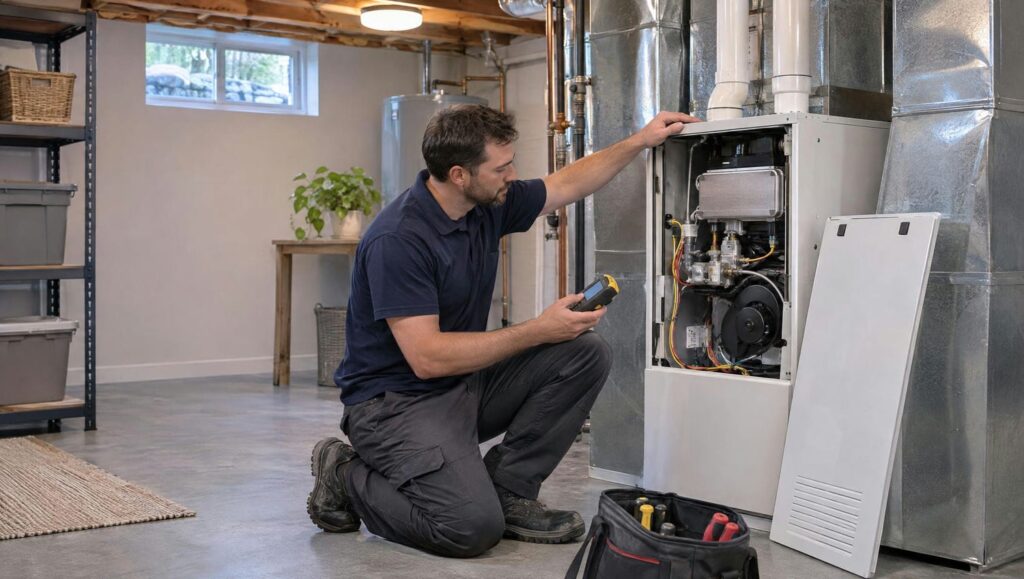
Your furnace is not reacting to the wind. It is reacting to a pressure reading, and the wind changed the pressure. Nothing has to be broken inside the cabinet for that to happen, which is why a furnace can run through a cold calm night and quit on a mild gusty one.
The Pressure Switch Has to Close Before the Gas Valve Opens
A pressure switch is a small sensor that measures the suction the exhaust fan develops, and the control board treats a closed switch as proof that the exhaust is actually moving. On a Lennox SLP98UHV the pressure switch has to close first, then that fan runs a 15-second purge, then the ignitor gets 20 seconds to heat, and only then does the gas valve open, so nothing else in the sequence happens until that switch has closed. Those figures belong to that model.
The switch is not checked only at the start. The burn stays conditional on that reading the whole time the furnace runs, which is why the gas can be cut off part of the way through a cycle.
Why the Difference Between Your Two Vent Pipes Is What Matters
A sealed furnace has two openings through the wall. One brings combustion air in and one pushes exhaust out, and the appliance only sees the difference between the two. Wind striking a wall raises the air pressure against that face, and a higher pressure sitting on the exhaust outlet works directly against the fan.
The position of each opening decides how much of that pressure the furnace works against. If one pipe sits in the raised pressure and the other sits in clean air, or around a corner, or several feet away, the furnace is handed a difference it was never designed around. Both pipes loaded the same way is a smaller problem than one pipe loaded and the other not. Allied Air, a Lennox International brand, specifies that the intake and the exhaust come through the wall as close together as possible, with a minimum of 6 inches between them on a side wall termination, so that wind pushes on both of them the same way.
Why a Short Gust Is Enough to Stop the Burner
A steady wind reduces the difference between the suction the fan produces and the suction the switch needs. A gust can remove that difference for a fraction of a second, and the board closes the gas valve as soon as the switch opens. That is why the symptom is a furnace that starts, runs, and then stops.
The Kitchener/Waterloo station’s highest recorded gusts in the 1991-2020 period were 117 km/h in March and 96 km/h in January, and it is the brief spike in a gust, rather than the day’s average wind, that a pressure switch responds to.
Two nearby patterns need separating from this one. A furnace that quits within a few minutes of starting, every single time it fires, is short cycling on every cycle rather than a wind problem.
If it will not light on calm days either, a furnace that will not light at all is a different starting sequence to work through.
The Two Pressure Switch Faults a Lennox Control Records Separately
Lennox controls record a pressure switch that never closed and a pressure switch that opened while the burners were already lit as two different conditions. On the Lennox model families that record it this way, a switch that opened 5 times during a single heating demand puts the furnace into a holding state called Watchguard, which the control enters instead of trying again straight away.
The two conditions send a technician in different directions, and the second one is what a windy night produces. Your furnace will show a code for this, and the number differs from model to model, so the code means nothing without the chart inside your furnace door. A furnace in this holding state comes back on its own clock, not because the problem went away, so the heat returning is not evidence that the venting is sound.
Two Kinds of Furnace, and Why Wind Affects Them in Opposite Ways
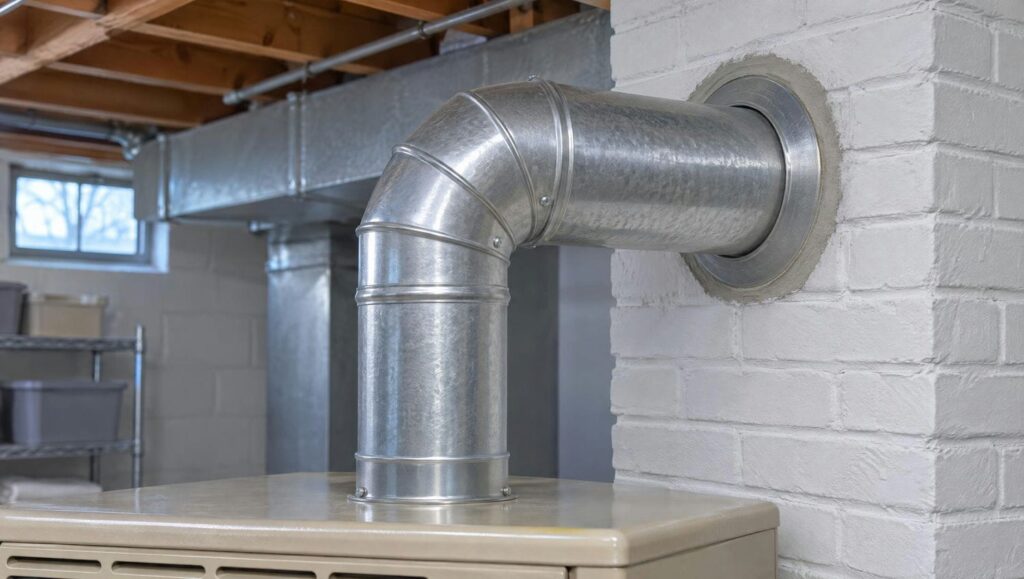
Two very different furnaces produce this symptom, and which one you have changes what wind means for you. A sealed furnace with a fan driving its exhaust shuts itself down. An older furnace venting into a chimney can keep burning while its combustion gases come back into the house. Telling them apart takes about a minute.
How to Tell Which Furnace You Have
Look at the outside wall first. White or grey plastic pipes coming through an exterior wall, usually two of them close together, mean a sealed furnace with a fan driving its exhaust. Then look in the basement. A single metal pipe running up into a masonry chimney, usually with a gap where it meets the furnace, means an older furnace that relies on hot gas rising to carry itself out, which the trade calls naturally drafted.
One cue settles it faster than a nameplate. The chimney-vented furnace is the older of the two designs, so the age of the equipment answers the question before anyone opens a panel.
One Family Shuts Itself Down, the Other Can Spill Into the House
A furnace with a fan driving its exhaust out a wall resists pushing gases back into the house. An older furnace that relies on hot air rising up a chimney does not, which is why the same wind produces a shutdown on one and a spillage problem on the other. Spillage means combustion gases coming back into the room instead of leaving the house. Natural Resources Canada calls fan-driven appliances more resistant to spillage, which is a comparison and not a guarantee.
On a chimney-vented furnace the wind can already have the air flowing the wrong way down the flue before the burners light. That is a backdraft, and once it has started it is difficult to reverse. Many of these older appliances have a switch at the draft hood, the open gap where the flue meets the furnace, that shuts them down, and a disturbed flame can also lose its flame signal. A clean shutdown is still not the design behaviour it is on a sealed furnace.
| What You Have at the Wall | What Wind Does to It | What Stops the Furnace | What It Means for Safety |
| Two plastic pipes come through the wall, with a fan pushing the exhaust out. | Wind presses on both openings and can load one harder than the other. | The pressure switch opens and the control board closes the gas valve. | The shutdown is the safety system working, because nothing burned while the exhaust was not moving. |
| A single metal flue runs up into a masonry chimney. | Wind at the chimney top can push the air back down the flue. | Nothing has to stop it, because it can keep burning while the gases come the wrong way. | Combustion gases can enter the house, so this one gets inspected rather than watched. |
Where the Vent Terminates, and Why the Position Matters in Wind
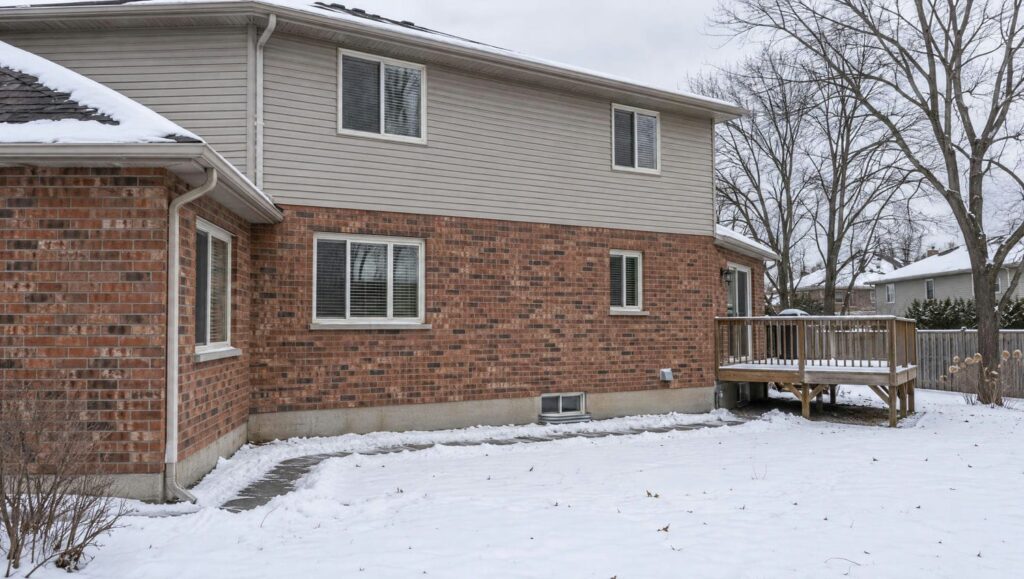
Almost all of this was settled on the day the furnace was installed rather than on the day it started quitting. The clearance table in your furnace’s manual is not the manufacturer’s preference, it is Canada’s gas installation code, and where the code is silent the manual and your gas supplier settle it. That code is not a document you can look up online, so the version you can read is the clearance table in your own furnace’s manual.
The Wall That Faces Our Winter Wind
Over the 1991-2020 period the most frequent wind direction at the Kitchener/Waterloo station was from the west, including in each of December, January and February, so a vent on a west or southwest wall is the one facing into it. Across the 1991-2020 averages for that same station the wind runs 16.5 km/h in January against 9.9 km/h in August, which puts the stronger winds in the heating season. Those averages are 30-year figures built from hourly observations at one station, not a description of any particular day.
Lennox tells the installer to put the termination where the prevailing winter wind will not blow the exhaust back into the intake, which makes the direction of our winter wind an installation decision rather than a detail.
There is no rule against putting a vent on the windward wall. The installer decides, and on an exposed west wall we would fit a concentric termination, which brings both the intake and the exhaust through one assembly, or move the vent to a different wall.
Corners, Alcoves, Soffits and the Space Under a Deck
A vent is only allowed to terminate under a deck or porch if the space beneath that floor is fully open on at least two sides, because a closed-in space traps exhaust instead of letting the wind carry it away. A vent terminal is also meant to stay well clear of an inside corner, because wind pressure builds in that corner instead of carrying the exhaust away. The same is true of an alcove, a window well and a soffit.
The exhaust also has to stay 3 feet away from a powered air inlet such as a ventilation system intake or a dryer vent, because a fan pulling air into the house a foot from the exhaust will draw flue gas in with it. A furnace drawing its own exhaust back in burns wet air with little oxygen in it, so the combustion degrades, the intake can ice up, and the failure looks electrical when the cause is airflow outside the house.
Height Above the Snow, and the Clearances Around the Gas Meter
A Lennox furnace vent has to sit at least 12 inches above grade, and at least 12 inches above the average snow accumulation rather than above bare ground, so the measurement that passed on a bare lawn in October is not the measurement that applies once the snow is down. A vent set low is also a vent sitting in the gustier, dirtier air near the ground.
A vent also has to stay 3 feet to either side of the line running straight up from your gas meter, and that applies for the first 15 feet above the meter, which on a narrow side wall can leave very little of the wall available. The two 3-foot figures are separate requirements with separate subjects, so neither one covers the other.
What to Check When Your Furnace Shuts Off When Windy
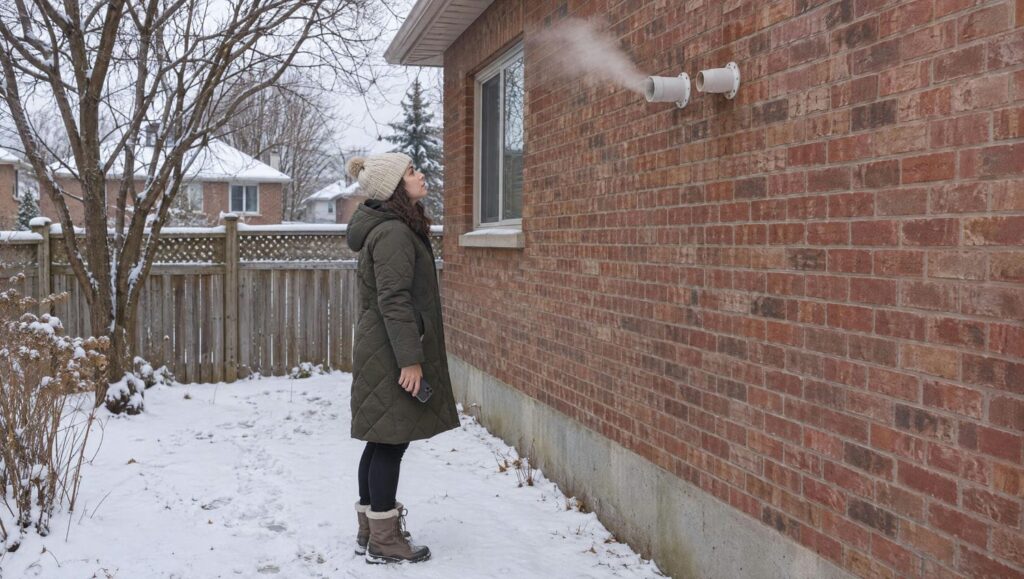
Every one of these checks happens outside the house. You do not need to open the furnace, pull a panel, or reset anything, and you should not. You are looking for the geometry of the two pipes and what sits around them, because that is what we will ask about on the phone.
What the Pattern Tells You, and What to Look At Outside
You can tell whether this is your furnace’s problem from your own house rather than from the forecast. If it goes off on gusty evenings and runs through calm cold nights, the vent termination outside the wall is where we would look first.
One walk around the house settles five things, and every one of them is something we can use.
- Find both pipes, which on a sealed furnace come through an exterior wall.
- Note whether they come through the same wall, and roughly how far apart they are.
- Note which direction that wall faces.
- Note what sits immediately around them: a corner, an alcove, a deck, the gas meter, or a ventilation or dryer vent.
- Note how high above the ground they sit.
When you call, tell us which wall the pipes come through and what the weather was doing when the furnace stopped.
Changes at the Vent That Make the Problem Worse
Lennox does not allow screens or perforated metal in the exhaust or intake termination, because they freeze up and can block the opening. A mesh guard added to keep wind or animals out turns a wind problem into a blockage problem.
A homemade deflector, shield or hood is the same mistake in a different shape, because it changes the resistance of a vent system that was certified as a complete assembly. Anything fitted at the termination has to appear in that furnace’s own installation instructions. A part that does not appear there is not covered by the approval the furnace was sold with.
Swapping an elbow for a tee is sometimes right and sometimes wrong, and the same test settles it: whether that arrangement appears in that furnace’s own instructions.
Why Replacing the Switch or Cutting the Power Does Not Fix This
The switch is reporting the pressure accurately, so replacing it does not change the pressure at the vent. A new switch measures the same pressure the old one did and opens at the same point.
Bypassing the switch is not an option, because it is the only thing standing between a blocked vent and the house.
If you have a visit booked, leave the breaker alone and let the furnace carry on as it is, because the fault has to be happening for us to measure it. Cutting the power ends the holding state, the furnace runs, and the condition we came to see is no longer there, which is why a reset hides an intermittent fault.
What We Do on a Wind Related Call, and What We Change
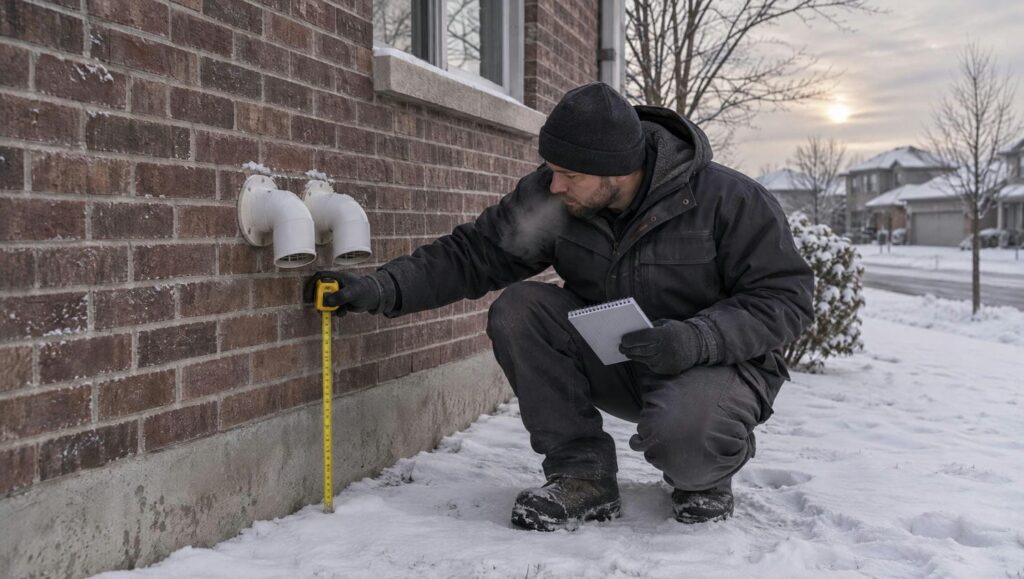
A wind related call is a measuring job before it is a parts job. We measure the vent run, we read the termination from outside, and we write down what that furnace’s own instructions require of it. Only then does anyone talk about what to change, because the change depends on which of those numbers is out.
What We Measure at the Vent Before We Change Anything
We measure the vent run itself: its length, its diameter and the number of elbows in it. The switch trips at a pressure set by the furnace manufacturer, and the margin between the suction the fan produces and the suction the switch needs is small enough that a long vent run, an extra elbow or a gust can use it up. A furnace installed near the limit of its allowable vent length therefore starts with less of that suction than one on a short straight run.
Then we read the termination from outside: which wall it is on, which direction that wall faces, how far apart the two pipes are, what geometry surrounds them, and how high they sit above the ground.
The Repairs That Hold, and the Ones That Come Back
On an exposed wall, the repair that holds is a concentric termination, because the wind then loads both pipes together instead of one and not the other. It is a listed kit, which means a kit the manufacturer has certified for that furnace, with its own part number. The parts specified for Canada are not the same as the parts specified for the United States, so a termination cannot be improvised on site.
Three other repairs hold. Bringing the separation between the two pipes back to what the manual requires, moving the termination off the windward wall or out of a corner, and correcting a vent run that was already close to its limit all change the pressure the switch is reading rather than the switch itself.
The repair that comes back is a new pressure switch on a furnace whose draft was already close to what the switch needs. The new switch measures the same pressure the old one did.
What This Costs, and What Moves the Number
The smallest version of this job leaves the termination where it is, because the position is right in principle and what needs correcting is the separation between the two pipes or the height above grade.
The middle version relocates the termination. That brings in a new opening in the wall, the pipe run inside the house, and sometimes the condensate drain, which carries away the water a high-efficiency furnace makes every time it runs.
The largest version is a vent run that was already close to the limit of its allowable length when it was installed, because on that furnace the wind is not the whole problem.
Three things move the number: how much pipe has to change, whether the new route passes through finished space, and how hard that wall is to open. If the furnace is also near the end of its life, the re-vent is worth pricing against a furnace installation, since we vent the new appliance correctly as part of that work.
What We Put in Writing If the Furnace Was Recently Installed
If the furnace went in recently, the measurements are the first thing to get onto paper, because any conversation about putting it right will turn on them.
We measure what is there, and we write down what that furnace’s installation instructions require. We give you both in writing, so you can take the comparison to whoever installed it. The paper is short, and it lists the dimension we measured beside the dimension the manufacturer asks for, one line per item.
From there you have two routes. You can go back to the original installer with our measurements, or we will do the correction ourselves. We tell you which of the two the job looks like to us before anybody starts.
Telling a Safe Shutdown Apart From a Carbon Monoxide Risk
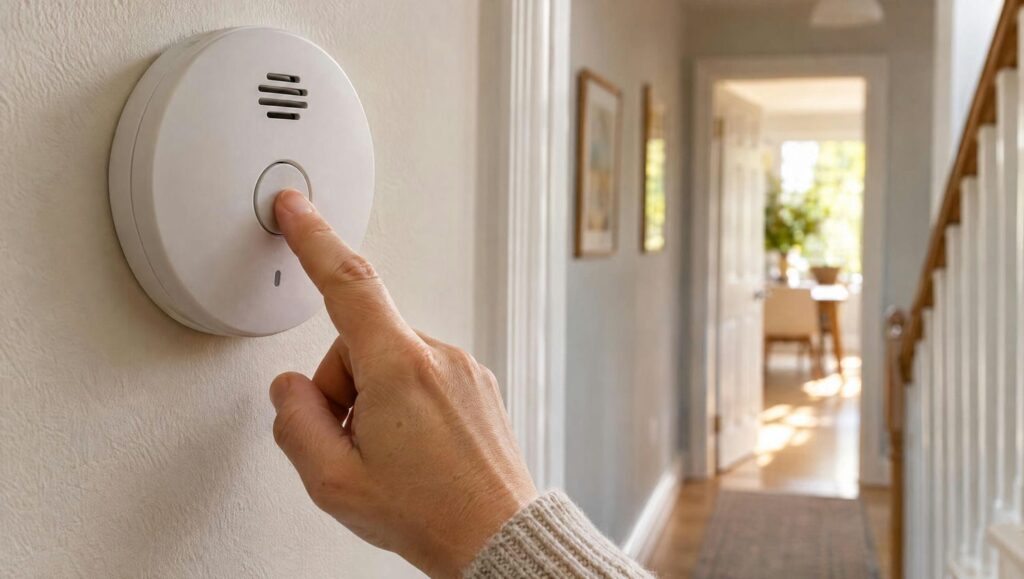
A furnace that shut itself down and a vent that is blocked are two different situations, and only one of them is a carbon monoxide problem. Keeping them apart matters, because the right response to the first is a service call and the right response to the second is clearing the vent and having it looked at.
A Wind Shutdown on a Sealed Furnace Is the Safety System Working
The switch opened, the gas valve closed, and nothing burned while its exhaust was not moving. That is the designed behaviour, and it is the reason you have a cold house rather than a problem you cannot see.
The shutdown does tell you something, though. The furnace is running at the edge of its range, on the appliance you will need in the worst weather of the winter, so it is worth correcting now rather than watching. Nothing about that shutdown needs an emergency response. It needs a measurement, and then a correction at the vent.
A Blocked Vent Is a Carbon Monoxide Hazard
A furnace that shuts itself down in a gust is not the same situation as a vent blocked by snow or ice, which can make a gas appliance malfunction and release carbon monoxide into the house. A blocked vent has nowhere for the exhaust to go, while a furnace in a holding state is not burning anything at all.
Ontario’s safety regulator is direct about this. Blocked exhaust vents can let carbon monoxide from fuel-burning appliances build up in a home, poisonings from snow-blocked vents have happened here, and those incidents can be fatal, so we clear and inspect a vent rather than watch it.
If a carbon monoxide alarm sounds, everyone leaves the house and calls from outside. If you are buying an alarm, buy one certified to CSA 6.19, the Canadian residential carbon monoxide alarm standard.
What to Do About a Furnace That Quits in the Wind
A wind related fault is one of the few a homeowner can describe accurately before anyone arrives, and that description shortens the work. We would rather hear which wall the pipes come through and what the weather was doing when the furnace stopped than work it out from the basement.
We work out of offices in Kitchener and Waterloo, we have been repairing furnaces in this area for over 10 years, and Local Heating and Cooling is an Authorized Lennox Dealer, which matters here because the manufacturer’s instructions govern what may be fitted at a termination. Moving or rebuilding a vent termination is gas work, and in Ontario that means a contractor registered with the TSSA. If the pattern matches your house, book the furnace repair as a diagnosis rather than a parts swap, and get in touch with our team with those two details.
Frequently Asked Questions
Wind changes the air pressure at the two openings where your furnace’s pipes come through the wall. The appliance only sees the difference between those two openings, so wind that loads one harder than the other reduces the suction the pressure switch is reading. When the switch opens, the control board closes the gas valve, and because the switch is watched the whole time the burners are lit, the furnace stops in the middle of a cycle.
Wind does not reach the flame on a sealed furnace. The combustion chamber is closed, the air comes in through its own pipe, and the pressure switch stops the sequence before the gas valve ever opens. On an older furnace venting into a chimney the picture is different: a disturbed draft can unsettle the flame and the appliance can lose its flame signal, which is a different problem on a different kind of equipment.
Adding a cover or a screen makes the problem worse rather than better. Lennox does not allow screens or perforated metal in the exhaust or intake termination, because they freeze up and can block the opening, and a blocked termination is a more serious situation than a shutdown in the wind. Anything fitted at the termination has to appear in that furnace’s own installation instructions.
A switch that opens in the wind is reporting the pressure accurately. Replacing it does not change the pressure at the vent, so the new switch reads what the old one read and opens at the same point. We examine the vent run and the position of the termination instead, measuring the pipe, the elbows and the geometry outside the wall. A faulty switch is a separate finding, and we would say so.
A sealed furnace that shut itself down did what it was designed to do. The switch opened, the gas valve closed, and nothing burned while the exhaust was not moving. The question worth asking is why the furnace is running so close to the pressure at which the switch opens, because the same furnace has to keep running when the weather is at its worst.
A vent can be moved, and on an exposed wall that is one of the corrections we would consider. Moving it is an installation decision rather than a repair, because it brings in a new opening in the wall, the pipe run inside the house, and sometimes the condensate line. That furnace’s own installation instructions decide what may be fitted and where it may sit, and we read them before we quote the work.
A concentric termination addresses the cause, because it brings both openings through one assembly so the wind loads them together. The manufacturer certifies it as a kit for a particular furnace, with its own part number, so the right one depends on which furnace you have. The parts specified for Canada are not the same as the parts specified for the United States, which is why a termination cannot be put together out of fittings on site.