
If both units are aging, replacing your furnace and air conditioner at the same time often makes sense, especially when the crew already has the system opened up. But it is not automatic. The right call depends on the age of each unit, the state of the shared coil, and what your budget can carry this year.
Here is the idea the whole decision turns on. Your furnace and central AC are not two separate appliances that happen to share a basement. They are one air-moving system with two heat sources. They share a blower, an indoor coil, the ductwork, and a refrigerant line. That shared plumbing is why “replace both” is even a question worth asking.
So the real fork is simple: do both now, or stage them one at a time. A new furnace installation and a central ac installation both cost real money, and this guide walks through when each approach wins and when it does not.
The Quick Answer: Should You Replace the Furnace and AC Together?
Replace the furnace and AC together when both are old enough that one is likely to fail soon after the other, or when the coil has to come out regardless. Stage them when one unit is clearly newer and running well.
Lean toward replacing both together when:
- Both units are 12 or more years old.
- The indoor coil has to come out for the job anyway.
- You want a true matched pair that hits its rated efficiency.
Lean toward replacing just one when:
- The other unit is clearly newer with years of service left.
- Your budget only stretches to one this season.
Your Furnace and AC Are One System, Not Two
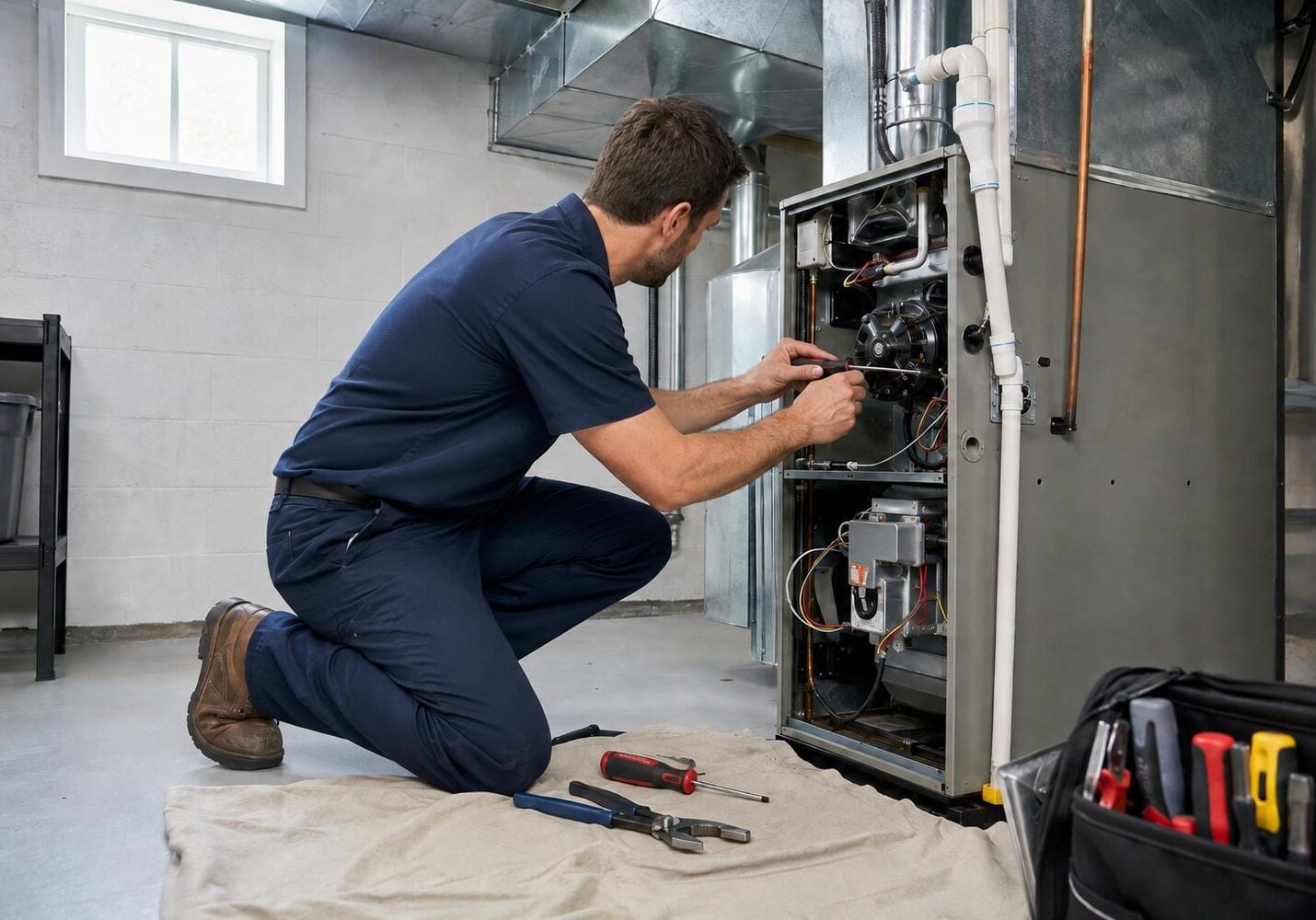
Picture what actually sits in your basement. A gas furnace stands indoors. An AC condenser sits outside. Between them, mounted on top of the furnace, is an indoor evaporator coil. The furnace’s blower is the fan that pushes cooled air through your ducts in summer and heated air in winter. One coil cabinet, one blower, one set of ducts, one refrigerant line-set tying the outdoor unit to the indoor coil. That is the shared hardware that makes “should I do both” a real question and not a marketing upsell.
The Shared Coil and Blower Are What Earn the Rating
The efficiency number on an air conditioner is a team score, not a solo score. Natural Resources Canada is direct about it: the indoor and outdoor components are meant to operate together, and the rated efficiency comes from tests of those components working as one combination. The outdoor condenser earns the rating with the specific indoor coil and the blower that moves air across it. Change one part of that trio and the tested combination no longer exists. So when you read a high SEER2 figure on a new condenser, understand what it assumes: a matching coil and a blower that can actually move the air the rating was measured with.
Why a New AC on an Old Coil Falls Short
Here is the catch that costs people money. When a central AC is replaced, the existing indoor coil should be replaced with one matched to the new outdoor unit, or the new unit will not deliver its rated efficiency. Bolt a high-efficiency condenser onto a worn coil and an old single-speed blower, and you paid for a number you will never see on your hydro bill. The condenser can only perform as well as the weakest part it is tied to. This single fact is the strongest reason the two halves so often move together: the moment you touch the AC, the coil is already on the table.
When Replacing Both Together Is the Smart Move
Doing both at once is not a blanket rule. It is a set of specific situations where combining the work saves you money, saves you a second disruption, or protects the performance you are paying for. Here are the ones that come up most in Kitchener-Waterloo homes.
Both Units Are Near the End of Their Life
Furnaces tend to outlive AC units by a few years, so when one gives up the other is often close behind. There is no fixed expiry date stamped on either machine. In our experience across the region, a well-kept furnace tends to run about 15 to 20 years and a central AC about 12 to 15, which means the two often reach the end of the road within a few seasons of each other. If your AC dies at 14 years and the furnace is 17, replacing the survivor within a couple of years is likely anyway. Doing both now avoids paying twice to open, drain, and re-commission the same cabinet. For the full picture on how long a central AC lasts and what shortens it, the lifespan detail is worth a read on its own.
You Are Already Opening Up the Coil Cabinet
A new furnace usually means a new coil cabinet, and a new AC means a new matched coil. Either way, the expensive access work is the same work. Once the coil is being touched, the math for “do both” shifts hard, because the labour you would pay for twice happens once.
Two separate points sit behind this, and they should not be blurred together. The first is the efficiency point above: a new condenser on an old coil generally will not deliver its rated efficiency. The second is a practical one from our own installs. In our experience, a mismatched coil can also affect your manufacturer warranty, since equipment makers assume the coil and condenser are the matched pair they certified. We flag both because they push the same direction: if the coil is coming out, matching the whole system is usually the cleaner call.
Why One Visit Usually Costs Less Than Two
Combining the work saves money because so much of an HVAC job is setup, not parts. One crew mobilizes once. One refrigerant evacuation and recharge. One coil-cabinet teardown. One commissioning and airflow balance at the end. Split the project into two visits and you duplicate most of that overhead. The equipment costs what it costs either way, but the labour and access are where doing it together tends to come out ahead. We will not print a dollar figure here because your home, your ductwork, and your equipment tier all move the number, but you can see what a new AC install actually costs and what drives it before you plan the spend.
Matching the Refrigerant Platform
New central air conditioners are moving to lower-emission refrigerants such as R-454B and R-32, while R-410A stays available to service the system you already own. You cannot mix refrigerants across a coil and a condenser, so a matched replacement keeps both halves on the same platform from day one. If you replace only the outdoor unit and leave an older indoor coil, you can end up managing a platform mismatch later. The exact changeover dates come from federal regulation and from each manufacturer, so we confirm what applies to your specific install when we quote it.
When Replacing Just One Makes Sense
Doing both is not always right, and we will tell you when it is not. Staging the work is a legitimate decision path, not a consolation prize. Here are the two situations where replacing a single unit is the smarter move.
If One Unit Still Has Years Left
If your furnace or your AC is clearly newer and running well, there is little sense in tearing out a healthy machine just to match its partner. A five-year-old furnace paired with a dead AC does not need replacing to keep the system honest. What you do watch in that case is compatibility: whether the surviving coil still matches the new outdoor unit, and whether the refrigerant platforms line up. Get those two answers before you commit, and a single replacement can be the right, cheaper call.
If Your Budget Only Stretches to One Right Now
Sometimes the honest answer is to fix the failure in front of you now and plan the second half for later. That is fine, as long as you stage it well. The trap is paying twice to open the same cabinet, so we plan the first visit with the second one in mind: matched components where it counts, and a clear note on what the follow-up job needs. Then, when the second unit is ready, you can weigh a full matched replacement against another partial one and choose with the real numbers in front of you rather than under the pressure of a mid-summer breakdown.
Replace Both Together vs One at a Time

The trade-off comes down to what you pay now, what you pay later, and what performance you actually keep. Here it is side by side.
| Factor | Replace Both Together | Replace One at a Time |
| Total cost | Bigger single cheque, usually lower overall (one mobilization) | Smaller now, higher combined later (two setups) |
| Rated efficiency | True matched pair, hits its rating | Mismatch risk; new unit may underperform on old partner |
| Disruption | One visit, one commissioning | Two separate jobs, home opened up twice |
| Refrigerant | Both halves on the same modern platform | Possible platform mismatch to manage later |
| Best when | Both units aged, or the coil has to come out | One unit is clearly newer, or budget is staged |
Efficiency: What AFUE and SEER2 Mean for a Matched Pair
If you replace both, this is where the payoff shows up on your bills. There are two ratings at work, one for each heat source, but they run through the same shared blower and ducts. Getting them right together is what a matched pair buys you.
What AFUE Tells You About the Furnace
AFUE measures how much of the fuel your furnace burns actually becomes heat over a full season. New gas furnaces sold in Canada must meet a 95% AFUE minimum, so a modern replacement is high-efficiency by design. That is worth knowing before you shop: the floor is already high. If you want to understand how AFUE affects your heating bills in real dollars, that breakdown lives in its own guide.
What SEER2 Tells You About the AC
SEER2 is the current efficiency scale for central air conditioners, and it is a matched-system rating, which ties straight back to the point about the coil and blower. Every new central AC sold in Canada has to meet a minimum efficiency standard, and today’s units are rated on the SEER2 scale. The higher the number, the less electricity the unit draws to move the same heat out of your home. For a clear walk through what SEER2 ratings really mean when you compare models, the dedicated explainer is the place to go.
Sizing the Pair Correctly
Replacing both at once is the moment to size the system correctly, not just swap like-for-like. Capacity should be chosen to just meet your home’s calculated design cooling load. Oversizing backfires: an AC that is too big runs in short cycles that cool the air fast but never run long enough to pull humidity out, so the house feels clammy even while the thermostat reads fine. Rule-of-thumb sizing off the old unit’s tonnage is exactly what a proper load calculation replaces. When both halves are new, a right-sized, matched pair is the version that actually delivers comfort and the efficiency you paid for.
Rebates and Your Real Options in Ontario
Let us be straight about the money, because there is a common myth here. Many homeowners assume a big government rebate is waiting for a furnace and AC replacement. In Ontario in 2026, that is not how the programs work. The former Enbridge Home Efficiency Rebate Plus is closed to new applicants. The current program is Home Renovation Savings, delivered through Save on Energy, and its rebates reward heat pumps, insulation and similar upgrades, not a like-for-like furnace or central AC replacement. So if lowering your energy bills and qualifying for a rebate is a priority, the honest question to ask is whether a cold-climate heat pump install fits your home before you decide, rather than counting on funding for a straight swap.
Get a Straight Answer for Your Home
The right call comes down to three things: the age of each unit, the condition of the coil, and the budget you are working with. A proper look at your actual system settles it fast, usually faster than a general article can. We have served Kitchener-Waterloo for over 10 years as an Authorized Lennox Dealer, with offices in Kitchener and Waterloo and a HomeStars Best of Award 5 years running, so the advice you get is grounded in the systems we install every week. When you are ready to size the job, our team can walk your home, check the coil, and lay out whether a full air conditioner installation or a staged plan makes more sense for you. To weigh your options with someone who will give you the real trade-offs, get in touch and we will book a visit.
Frequently Asked Questions
Often yes, but not automatically. When both units are aging or the indoor coil has to come out for the job anyway, doing both in one visit usually saves money and gives you a true matched pair. When one unit is clearly newer and running well, staging the work is the smarter call. The deciding factors are the ages, the coil, and your budget.
It can be installed, but it usually will not deliver its rated efficiency, because a central AC earns its rating as a matched combination of outdoor unit, indoor coil, and blower. Put a new high-efficiency condenser on a worn coil and you lose much of the performance you paid for. Separately, in our experience a mismatched coil can also affect your manufacturer warranty, since makers certify the coil and condenser as a pair.
It is a bigger single cheque, but usually a lower total than two separate jobs. So much of the cost is setup: one crew, one refrigerant evacuation and recharge, one coil-cabinet teardown, one commissioning. Split it into two visits and you duplicate most of that overhead, which is why doing both together tends to come out ahead over the full spend.
Not for a like-for-like swap. Ontario’s current Home Renovation Savings program funds heat pumps, insulation and similar upgrades, not a standard furnace or central AC replacement. If rebates matter to you, the useful move is to ask whether a heat pump fits your home, since that is where the incentives actually are.
There is no fixed expiry date, so go by range and condition. In our experience a furnace tends to last about 15 to 20 years and a central AC about 12 to 15, which is why the two often reach the end within a few seasons of each other. Age, rising repair costs, and falling comfort together tell you more than any single number, and the AC lifespan guide digs deeper into what shortens it.
New central air conditioners are moving to lower-emission refrigerants such as R-454B and R-32, while R-410A stays available to service and recharge the system you already own. You cannot mix refrigerants across a coil and condenser, so a matched replacement keeps both halves on the same platform. The exact changeover dates come from federal regulation and each manufacturer, so we confirm what applies to your install when we quote it.